The first Privacy News of 2025 covers the release of the Biometrics Code and how to give feedback on this, a new case note about personal information being published to a website, and the introduction of OPC’s Māori reference panel. There is also a notice about new translations of our privacy brochures – we now offer them in Traditional and Simplified Chinese, and Vietnamese.
Office of the Privacy Commissioner | Printable privacy brochures in Traditional and Simplified Chinese
Our brochure covers New Zealander’s privacy rights, what to do if your personal information is taken, and how to make a complaint to us. It also includes our contact details. We find these are popular with GP clinics, Citizen’s Advice Bureau outlets, and libraries.
These brochures can be printed from a home or office computer. They are double sided, with an English translation on one side.
Please note, we are unable to provide professionally printed versions of this brochure. View professionally printed options.
Download our privacy brochure in Traditional Chinese (PDF, 1.78MB)
Download our privacy brochure in Simplified Chinese (PDF, 1.78MB)
AI-driven hazard detection is coming to timber manufacturing, thanks to a new agreement worth nearly half a million dollars between WorkSafe New Zealand and a major player in the wood processing industry.
Claymark, New Zealand’s largest manufacturer and exporter of premium pine products, is putting $481,000 into a range of initiatives. It comes after a worker had two fingers amputated in a machine at Claymark’s Rotorua factory in February 2023.
WorkSafe’s investigation found the machine was unguarded and there was an ineffective system for maintenance. Training and supervision of workers also fell short.
WorkSafe has now accepted an enforceable undertaking (EU) from Claymark. An EU is a binding commitment to fund and resource comprehensive health and safety improvements. Claymark’s EU includes:
CCTV systems incorporating AI technology to indicate risks to workers’ health and safety in real time.
Offering up to 15 trials of the technology to other businesses in the wood manufacturing sector.
Microlearning and interactive displays in break rooms to upskill workers on health and safety.
Reparation to the victim.
We are sharing details of the investment to coincide with World Day for Health and Safety at Work, which this year focuses on the impacts of digitalisation and artificial intelligence on workers’ health and safety.
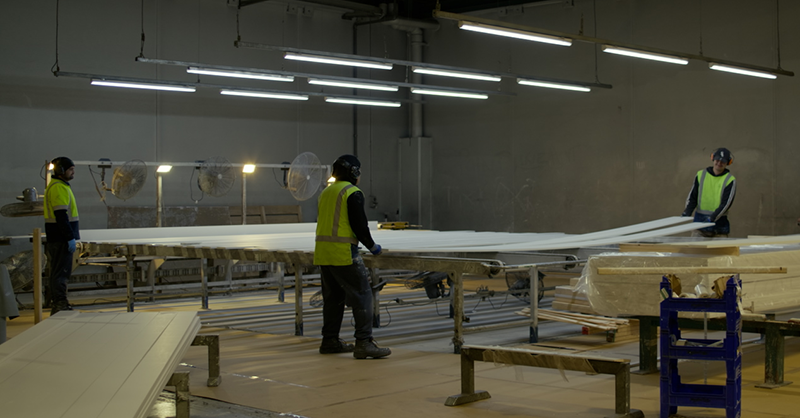
Workers in action at Claymark’s Vaughan Road factory in Rotorua.
“We are looking forward to seeing Claymark pioneer its AI innovation to benefit the timber processing sector more broadly. Agreements like this are all about enacting positive improvements from an adverse event,” says WorkSafe’s Head of Regulatory Services, Tracey Conlon.
“The initiatives align with WorkSafe’s priority plan for manufacturing, which is one of the most high-risk sectors for workers in Aotearoa. Unsafe machinery is a persistent problem in the sector, which businesses cannot overlook.”
EUs are a way for WorkSafe to hold businesses accountable for health and safety breaches. WorkSafe monitors progress on the agreed commitments and can seek a court order enforcing them if they are not upheld. WorkSafe’s role is to influence businesses to meet their responsibilities and keep people healthy and safe.
Statement from Claymark’s executive director Paul Pedersen
At Claymark, the health, safety, and wellbeing of our people is our highest priority. An incident involving one of our team members has had a significant impact – both physically and emotionally. We acknowledge the effect this has had on the individual, their whānau, and our wider community, and we are committed to learning from this experience to ensure safer outcomes for everyone.
Through our enforceable undertaking, we see a valuable opportunity to drive meaningful, people-focused change – both within Claymark and across the wood manufacturing sector.
Our key initiatives include:
Engaging with local communities and schools in the towns where we operate to promote safe wood manufacturing practices and support safe, informed pathways into the industry.
Working alongside the Central North Island Wood Council (CNIWC) and other industry bodies to share our learnings and help build a stronger health and safety culture sector-wide.
Investing in our people through modern, online and interactive training modules, with flexible learning tailored to roles and responsibilities. We are also exploring the potential of AI to support smarter, more responsive safety systems and personalised learning experiences.
This is about more than compliance – it’s about creating a workplace where our people feel informed, supported, and safe. Claymark is committed to continuous improvement and collaboration as we work towards a safer, stronger future for our people, our industry, and our communities.
Statement from the injured worker
On 27 February 2023, my life changed forever. While performing my job, I suffered an injury that resulted in the amputation of two fingers on my right hand. Since that day, I’ve undergone three surgeries to address the damage, and while recovery has been challenging, I remain hopeful about the possibility of prosthetic fingers in the future.
Everyday tasks I once took for granted like writing, showering, even holding objects, now require patience and adaptation. Music, which has always been a passion of mine, has become a bittersweet pursuit; playing the guitar and trumpet now demands creativity and resilience as I relearn techniques with my altered hand.
Throughout this journey, my wife, children, and wider whānau have been my rock. Their unwavering emotional support and practical help have carried me through the darkest moments of my recovery. I cannot overstate how grateful I am for their love and strength.
I’m deeply appreciative of Claymark’s commitment to workplace safety improvements outlined in this agreement, many of which I’ve witnessed firsthand. At 51, retirement isn’t an option I’m ready to consider which is why I feel fortunate to continue contributing to Claymark’s team. While my path forward looks different than I once imagined, I’m determined to adapt and keep moving ahead, one day at a time.
WorkSafe New Zealand has opened its first intake of health and safety inspectors for 2025, and is keen to hear from anyone with an interest in making work safer in Aotearoa.
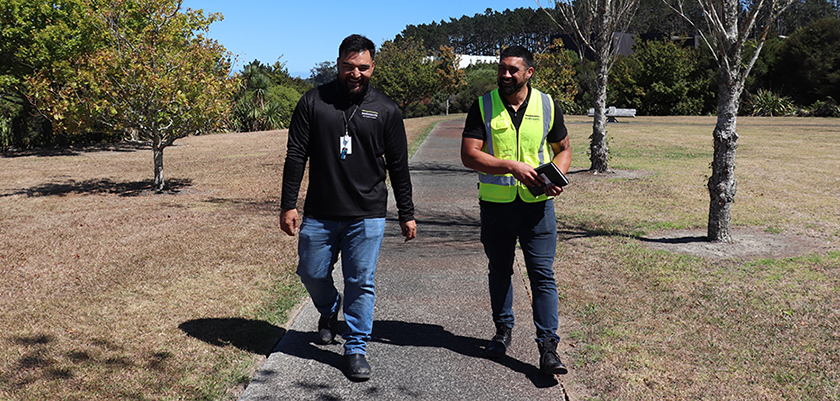
Inspectors are our frontline eyes and ears across the motu. We are adding up to 60 new recruits this year, each of whom will get full training and development.
This is an opportunity for people starting their career, looking for a change of career, or considering a meaningful way to repurpose their existing skills. You’ll need to be communicative and resilient, have an inquiring mind, and be an effective problem solver.
“We are currently integrating the full range of assessment and investigation work in our inspectorate. This will create a supportive training ground for our incoming inspectors to springboard from,” says WorkSafe’s Head of Inspectorate Rob Pope.
WorkSafe is investing an extra $2.7 million annually into growing its inspectorate. This is part of our new strategy to target the sectors with highest work-related harm – construction, manufacturing, forestry, and agriculture. While a background in these sectors would be highly advantageous to working for WorkSafe, it is not essential.
WorkSafe is the health and safety regulator for work in New Zealand. Our role is to influence businesses to meet their responsibilities and keep people healthy and safe.
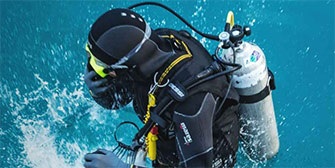
This technical bulletin provides guidance about the work trainee divers may undertake while under direct supervision during occupational diving operations.
Introduction
WorkSafe New Zealand requires applicants to provide dive logs to support their Certificate of Competence (CoC) application.
WorkSafe has recently seen an increase in divers submitting dive logs that indicate a need to make clear the distinction between a ‘diver under training’ and a ‘diver working without a CoC’.
This technical bulletin clarifies recommendations for divers who do not hold a current CoC as an occupational diver, but who are doing training dives while at work.
Background
The Health and Safety in Employment Regulations 1995 (the Regulations) require occupational divers working for a Person Conducting or Undertaking a Business (PCBU) to hold a CoC in the category in which they are diving. The CoC is issued by WorkSafe.
The Regulations have a provision allowing workers to undertake training to become the holder of a CoC, but require diving ‘under the direct supervision’ of another diver who holds a CoC for that category of diving.
WorkSafe defines direct supervision as being ‘within reach or contact at all times to ensure immediate assistance can be provided if necessary’.
When is a diver under training?
If a diver does not hold a current CoC, they must be under the direct supervision of a current CoC holder while diving is taking place. In this case they are considered a ‘trainee diver’.
As with all trainees in the workplace, supervision is required because they do not yet meet the necessary level of competency to operate independently in the workplace. For divers, this level of supervision is higher than expected in other workplaces.
Students undertaking formal instruction on a diving course (for example, Australian Diver Accreditation Scheme, Professional Association of Diving Instructors, and Science Diving New Zealand) are not working and do not require a CoC under the Regulations providing all the diving is in accordance with the course syllabus and supervised by a suitably qualified trainer holding a CoC.
But if they begin work tasks outside of their dive course (for example, leading dives, taking samples, fixing nets, cleaning aquariums or being a safety diver) they are considered to be working and will be seen as requiring a CoC.
What sort of training can be undertaken?
While the Regulations allow for employees to train to become a holder of a CoC, the Health and Safety at Work Act 2015 (HSWA) requires a PCBU to ensure the reasonable safety of all workers, including those under training.
Before conducting any trainee diving, a PCBU must ensure that the minimum diver level pre-requisite competency has been met, and the trainee divers are competent to learn the specific tasks required for that category of CoC. This includes the use of the diver’s breathing equipment and any hazardous powered tools – both of which should be taught in a formal diving course before use in any workplace.
As trainee divers are learning, PCBUs must also consider both the environment and duration of the training as well as competency levels. Dive sites should be assessed to be of low risk, close to appropriate surface and emergency support and in an environment where the focus is on the work skills being taught, not the hazards of the actual dive site. Remote and isolated sites are not recommended.
Further, being a ‘trainee diver’ should be time limited to ensure the diver has an expectation of how long it will take to achieve competency in the assigned work skills and be able to be assessed for all the skills learnt. Most trainee divers should be able to effectively show competency within a few weeks or months, depending upon the complexity of diving and skills required. In any case the trainee period should be limited to six months at maximum, unless there are exceptional circumstances.
What is not considered training?
A trainee diver cannot fill the role of a standby diver – any standby diver must be able to immediately come to the working diver’s assistance, and as such must already hold a suitable CoC. Performing the role of a standby diver is not considered training.
Even though a trainee diver may be considered the CoC diver’s ‘buddy’ when diving, they cannot be counted as an extra ‘working diver’. Doing so without having separate direct supervision may not be considered training and could indicate the diver is working without a CoC.
Dive logging as a trainee diver
It is expected practice that trainee divers log any supervised dives as training dives to achieve a competency requirement or qualification. This practice is clearly undertaken in a formal course environment and should be replicated by all divers under training.
All normal dive log details should be recorded (such as date, location, depth and time) along with details of their supervising diver, other divers in the team as well as the competencies and activities being undertaken. The logs of training dives should then be submitted as part of their CoC application.
Any dives not directly supervised are not considered training or suitable recent experience for the trainee diver and could indicate that the diver may have been working without a CoC.
Medicals for trainee divers
The Regulations require that occupational divers be ‘medically fit’. Due to the health and exposure risks associated with occupational diving, any trainee diver should be medically assessed and hold a diving medical clearance prior to undertaking any training dives under supervision.
Recommendations
The competency requirements for the relevant categories of CoC are the minimum standards for an occupational diver in the respective sectors. Sometimes a risk assessment will identify additional competencies that divers may require.
WorkSafe recommends:
A trainee diver must be under direct supervision of a suitable CoC holder when underwater.
A trainee diver should hold a suitable medical clearance for occupational diving and have the minimum pre-requisite diving qualifications required to apply for a CoC in that category of diving before starting in-water training.
Training should only be conducted with appropriate controls for the safety of both the trainee and supervising diver.
Training sites should be assessed as suitable for the trainee diver and with adequate surface and emergency support.
At no time should a trainee diver be using any diver’s breathing equipment or hazardous powered tools unless qualified from, or as part of, a formal training program.
All training dives should be logged as such with appropriate details included.
Employers should aim to achieve the competency requirements in a timely manner with minimal delay. Divers should not be operating as divers-in-training for an extended period.
A forestry subcontractor was failed by poor risk management from the two businesses above him, both of which have been sentenced for their inaction.
39-year-old Misha Tremel was killed while manually felling trees on a small block at Clevedon in June 2022. The qualified tree feller had been brought in by Turoa Logging Limited, which was harvesting 7,800 tonnes of pine on behalf of the forest managers Pulley Contracting Limited.
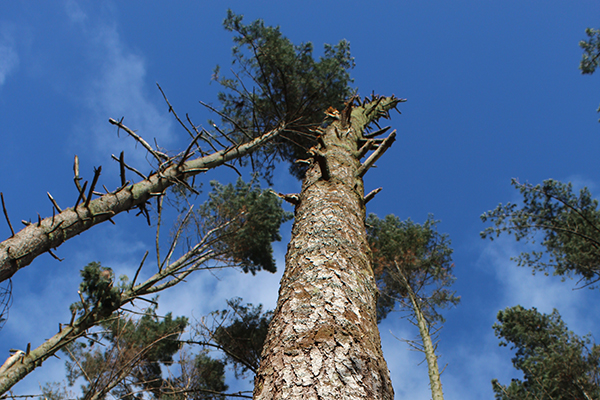
Some of the trees being manually cut by Mr Tremel were windthrown, meaning they had been bent and damaged by wind. WorkSafe and the forestry industry strongly recommend that such trees are harvested using machines.
WorkSafe’s investigation found Turoa Logging had not properly reassessed its harvesting plan after nearby trees were cut by machinery and had not ensured safe felling practices were followed. Pulley Contracting did not do enough to identify the ongoing risks to workers and should have been auditing Turoa Logging more thoroughly.
“Businesses must manage their risks and cannot contract their way out of responsibility. Contractors on smaller sites like this are owed the same level of care as those in large-scale operations,” says WorkSafe’s area investigation manager, Paul West.
Mr Tremel was a much-loved husband and father who was originally from Ukraine. His death continues to be a shattering loss for his young family to process.
“Businesses must consult, cooperate and coordinate as part of a contracting chain. WorkSafe recommends health and safety is always built into contract management,” says Paul West.
Forestry had the highest fatality rate of any sector in 2024, with 16.58 deaths per 100,000 workers. Under its new strategy, WorkSafe is turning about 15 percent of its targeted frontline activity to the forestry sector because of the high rate of harm, particularly for Maōri.
WorkSafe’s role is to influence businesses to meet their responsibilities and keep people healthy and safe. When they do not, we will take action.
Turoa Logging Limited and Pulley Contracting Limited were sentenced at Manukau District Court on 4 March 2025.
Both companies were ordered to pay a combined total of $335,680 in fines and reparation
Both companies were charged under sections 36(1)(a), 48(1) and (2)(c) of the Health and Safety at Work Act 2015:
Being a PCBU having a duty to ensure, so far as is reasonably practicable, the health and safety of workers who work for the PCBU, while the workers were at work in the business or undertaking, did fail to comply with that duty, and that failure exposed workers to a risk of death or serious injury.
The maximum penalty is a fine not exceeding $1.5 million.
Media contact details
For more information you can contact our Media Team using our media request form. Alternatively:
“This is an incredibly busy time for schools with exams looming. staffing appointments in a particularly tight job market and end of year awards and planning for the start of 2025 in full progress,” says Kate Gainsford, Chair of the Secondary Principals’ Council.
“Principals and staff have loads of work to get through in the time left before the start of 2025 and gathering information for a tiny lobby group appears to be pretty wasteful of government resources.”
Kate Gainsford said many principals were disappointed to receive such a request in this day and age. “Te Reo Māori is an official language in Aotearoa New Zealand and tikanga is a very significant part of ensuring that schools are welcoming, comfortable places for ākonga Māori and their whānau, and all young people growing up in New Zealand.
“Schools have worked hard over many years to meet Te Tiriti partnership responsibilities so that all students can be given the opportunity to learn te reo Māori and tikanga – it is part and parcel of being a good Te Tiriti partner.
“The OIA request asks schools to set aside their usual work so they can do research for the lobby group but provides no clarification about their motivation or what they are seeking to shed light on for what public good.”