Dodgy crane safety inflicts misery for teen worker

Source:

Old equipment repurposed by businesses must be safe to use, WorkSafe New Zealand says, following sentencing of a Rotorua company whose modified crane became a weapon that changed the life of a teenage contractor.

Harrison Gilbert was struck in the face by an untethered 412-kilogram steel beam being manoeuvred by the mobile crane at Lakeland Steel in Rotorua, on the day of his seventeenth birthday in October 2022.

Mr Gilbert was knocked unconscious and received over 100 stitches in his face, a broken eye socket, a broken nose, several smashed or lost teeth, and skull fractures. He required facial reconstruction surgery and has more to come.

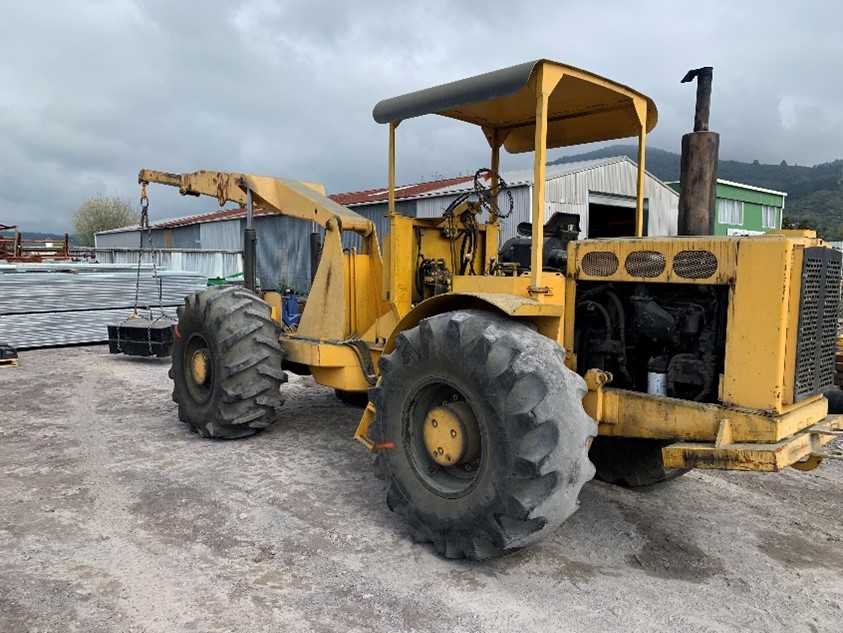
A WorkSafe investigation found the mobile crane had no certificate of inspection, no load safety devices fitted, and unclear labelling on its controls. The load should have had a tag line or tether to steady it. The crane appears to have originally been a log skidder bought in the 1970’s by the previous owner of Lakeland Steel. At some point in time, it was modified into a crane which was inherited by the current owners who did not maintain it.

Mr Gilbert had not been trained in any of the activities associated with the crane, and was dividing his attention between the load and working with the crane operator when he was hit.

“This young worker was traumatically let down through no fault of his own. Simply put, the crane should not have been operational,” says WorkSafe’s area investigation manager, Paul West.

“Businesses must manage their risks. This includes regularly checking all their equipment to check it’s fit for purpose and compliant. Pay extra attention to modified or older equipment so it doesn’t get neglected while still operational.”

The Crane Association says the incident highlights the importance of ensuring freely suspended crane loads are controlled by a tag line or tether.

“In an industry full of risks, it’s important to understand all the elements that contribute to working safely. Businesses must train their staff in selecting and properly using tag lines, because you don’t want injuries like these on your conscience if things go wrong,” says the Association’s chief executive Sarah Toase.

WorkSafe’s role is to influence businesses to meet their responsibilities and keep people healthy and safe. When they do not, we will take action.

Read more from the Crane Association on tag line safety(external link)

Background

  • Lakeland Steel Limited was sentenced at Rotorua District Court on 20 February 2025.
  • A fine of $234,000 was imposed, and reparations of $54,131 were ordered
  • Lakeland Steel was charged under sections 36(1)(a), 48(1) and (2)(c) of the Health and Safety at Work Act 2015
    • Being a person conducting a business or undertaking (PCBU), having a duty to ensure, so far as is reasonably practicable, the health and safety of workers who work for the PCBU, including Harrison Gilbert, while the workers are at work in the business or undertaking, namely using a T-Lift Mobile Crane to move steel beams, did fail to comply with that duty, and that failure exposed the workers to risk of serious injury or death.
  • The maximum penalty is a fine not exceeding $1.5 million.

Media contact details

For more information you can contact our Media Team using our media request form. Alternatively:

Email: media@worksafe.govt.nz

Work-related health newsletter – February 2025

Source:

Check out the latest guidance and resources, and a number of upcoming courses and conferences to help you ensure a healthy and safe work environment for you and your workers.

In this edition:

  • Updated leptospirosis guidance​
  • New restricted entry intervals and guidance
  • Mentally healthy work infographics
  • Psychosocial survey of the retail sector
  • Workplace exposure standards 
  • Engineered stone and respirable crystalline silica consultation 
  • New ACC recovery at work resources    
  • New Zealand Workplace Health and Safety Awards 2025 
  • MATES in Construction NZ awarded funding 
  • New Zealand Journal of Health and Safety Practice 
  • Courses and resources
  • Upcoming conferences

Read the full newsletter(external link)

Crush death triggers on-farm traffic alert

Source:

WorkSafe New Zealand is calling on farmers to consider how vehicles move inside their barns and sheds, following a sentencing for an horrific death at one of South Canterbury’s biggest agribusinesses.

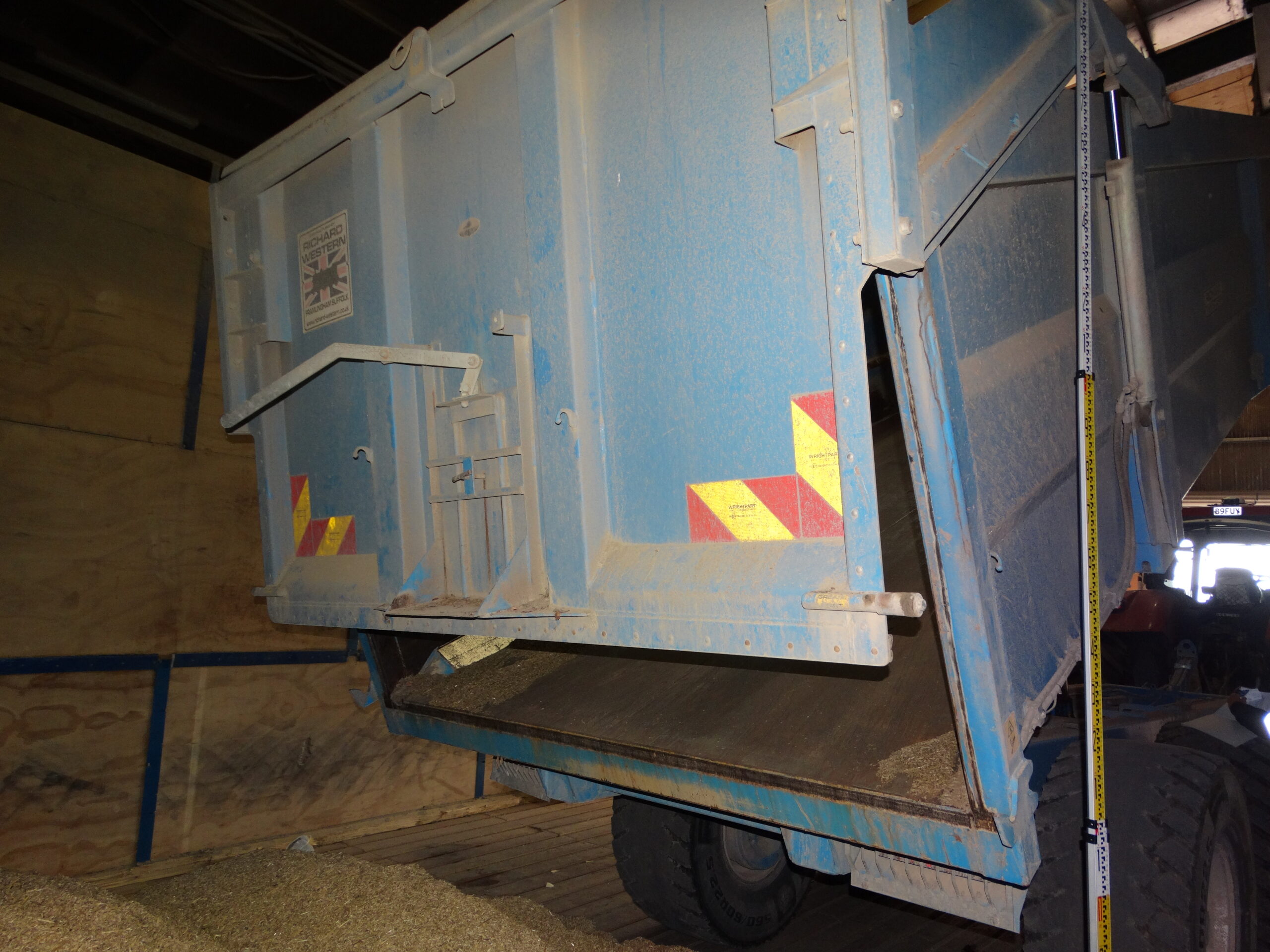
Louis van Heerden was crushed to death by an hydraulic tailgate on a trailer at Turley Farms Limited near Temuka in March 2022. The 45-year-old had been standing at the back of a dark, narrow shed as a spotter while grass seed was being tipped off the trailer.

WorkSafe investigators found Turley Farms had no specific plan in place for managing farm traffic indoors. In addition, workers should not have been permitted in such a restricted space.

Turley Farms has now been sentenced for its health and safety failings.

“Farmers are tempting fate if they think traffic only needs to be managed outdoors. Without a clear plan for how vehicles and people move around indoor barns and sheds, it’s only a matter of time before something goes terribly wrong,” says WorkSafe’s area investigation manager, Steve Kelly.

“This is a good reminder to take a critical look at how tractors and other vehicles move around inside farm buildings. Clear separation of vehicles and pedestrians is the key component. Signage and designated safe areas are also simple and inexpensive ways to boost safety – especially when compared to a conviction and a fine.”

Following the fatality, Turley Farms has introduced reversing cameras, closing alarms, and isolation valves to the back of its trailers.

Vehicles are a leading cause of death and injury on New Zealand farms, which is why agriculture is a priority sector under WorkSafe’s new strategy. Agriculture accounts for around 25 percent of serious acute harm in Aotearoa while having only six percent of employment.

Businesses must manage their risks, and WorkSafe’s role is to influence businesses to meet their responsibilities and keep people healthy and safe. When they do not, we will take action.

Read WorkSafe’s guidance on keeping safe when tipping loads
Read WorkSafe’s guidelines on managing workplace traffic

Background: 

  • Turley Farms Limited was sentenced at Timaru District Court on 13 February 2025
  • A fine of $247,500 was imposed, and reparations of $201,477 were ordered
  • Turley Farms was charged under sections 36(1)(a), 48(1) and 48(2)(c) of the Health and Safety at Work Act 2015
    • Being a PCBU, having a duty to ensure, so far as is reasonably practicable, the health and safety of workers who work for the PCBU, including Louis Frederick van Heerden, while at work in the business or undertaking, namely acting as a spotter while plant was being unloaded into a drying shed, did fail to comply with that duty and that failure exposed workers, namely Louis Frederick van Heerden, to a risk of death or serious injury arising from exposure to the risk of being struck or crushed by plant.
  • The maximum penalty is a fine not exceeding $1.5 million.

Media contact details

For more information you can contact our Media Team using our media request form. Alternatively, you can:

Phone: 021 823 007 or

Email: media@worksafe.govt.nz

World’s largest turtle inspires international research

Source: Police investigating after shots fired at Hastings house

Date:  20 March 2025

Sarah Dwyer of the DOC Aotea Operations Team and Sierra Fullmer, Research Project Technician for Upwell Turtles, ready to monitor leatherback turtles, the special ‘bubble window’ is a necessity for viewing directly below the plane
Image: DOC

Their research involves a series of flights following gridlines to visually record numbers of leatherback turtles and estimate distribution to help inform conservation strategies.

The research is funded through the DOC Marine Conservation Services Programme and is a first for New Zealand. DOC is leading the study locally, alongside Upwell Turtles (USA), and with support and expertise from NIWA, Monash University (Australia), and Moss Landing Marine Laboratories (USA).

International collaboration is essential to these research and conservation efforts because the West Pacific leatherback population being studied migrates huge distances across the entire Pacific Ocean.

DOC Senior Marine Science Advisor, Dr Karen Middlemiss, says leatherbacks are like the tuatara of the sea.

“They are as ancient as dinosaurs and their existence is under threat.

“The Western Pacific leatherback population has declined by more than 80 percent in the past 40 years and is at risk of extinction,” says Karen.

Leatherbacks are seen off the east coast of New Zealand in summer and spring when the weather is warmer.

“Some of the population migrate here after nesting to forage on jellyfish and salps, but we don’t have a lot of information about them while they’re here.

“The Upwell team are world leaders in monitoring leatherback turtles and we are excited to be working together and benefiting from their knowledge and experience,” says Karen.

Dr George Shillinger, Executive Director of Upwell Turtles, says leatherbacks are among the most highly migratory and transboundary marine species on the planet.

“Effective conservation requires international collaboration from nesting beaches all the way to distant foraging habitats. We are thrilled to have New Zealand contributing to our global understanding and conservation of this ancient turtle species.”

“It’s also exciting for our team to be experiencing New Zealand’s marine biodiversity. It’s a hotspot for so many species, we’ve seen beaked whales, baleen whales, ocean sunfish, and many different dolphins and toothed whales,” says George.

Leatherbacks face many threats across their habitats, including unintentional capture by fisheries, the harvesting of adult turtles and eggs, plastic pollution, nesting beach habitat loss, climate change, and vessel strike.

The public can contribute to protecting leatherbacks and other marine animals by preventing plastics and pollution reaching the sea.

No marine turtles nest on beaches in New Zealand. Any turtle on the beach should be reported immediately to 0800 DOC HOT (0800 362 468).

Contact

For media enquiries contact:

Email: media@doc.govt.nz

DOC urges dog owners to act after nine kiwi killed

Source: Police investigating after shots fired at Hastings house

Date:  19 March 2025

“This situation needs urgent action. Kiwi are a taonga species found only in Aotearoa, and if they disappear from here, they’re gone forever. Dog owners and all organisations involved must take their responsibilities seriously.”

“These recent kiwi deaths are devastating, and we need everyone to play their part in protecting our native wildlife,” says Bronwyn BauerHunt, DOC Operations Manager for the Bay of Islands.

The first dead kiwi was reported to DOC on 29 January 2025, followed by two more on 11 February. Between 12 February and 9 March, another six kiwi were found dead. All were found on private land. Some of the carcasses were badly decomposed, making it difficult to determine the exact cause of death, but several were fresh enough to be tested for canine DNA.

DOC rangers met with Far North District Council (FNDC) staff on 14 February, to discuss the best approaches to address uncontrolled dogs in the immediate area. Under the Dog Control Act, only FNDC has the authority to enter private property on reasonable grounds, and seize dogs suspected of attacking kiwi.

DOC has been working closely with Kiwi Coast a community-led, collaborative conservation initiative in Northland, to examine the kiwi, collect DNA samples where possible, and record details of each case. All kiwi in good enough condition will undergo a post-mortem examination to determine the cause of death.

These latest deaths add to a concerning trend. Dogs are the leading cause of kiwi deaths, and in past incidents, they have been responsible for multiple kiwi fatalities across Northland, leading to prosecutions. In 2019, a single roaming dog killed at least six kiwi near Whangārei, resulting in a prosecution and a fine for the owner.

In 2021, another case in the Bay of Islands saw a dog owner fined after their pet was linked to the deaths of several kiwi. These cases highlight the serious consequences of failing to control dogs in kiwi habitat.

“We urge all dog owners in kiwi zones to be responsible. Keep your dogs under control at all times, especially at night. If you live in or near kiwi habitat, the safest option is to keep your dog contained or inside when not supervised,” says Bronwyn.

Anyone with information about uncontrolled dogs in the area is encouraged to contact FNDC 0800 920 029 or DOC 0800 DOC HOT.

Contact

For media enquiries contact:

Email: media@doc.govt.nz

Work underway to repair Coromandel Walkway

Source: Police investigating after shots fired at Hastings house

Date:  18 March 2025

The Coromandel Walkway, connecting Stony Bay and Fletcher Bay, follows the contour of the coastline and is a popular visitor site in northern Coromandel. It was damaged during the extreme weather events of summer 2022-23, with large slips causing significant damage and forcing the temporary closure of a 670-metre section.

“In some sections, the landslips had taken out the track completely and it has been completely impassable,” says DOC’s Coromandel Supervisor Matt Flynn.

DOC staff have waited for land movement in the area to cease – and now the land has settled, work has begun to recut the track.

“We weren’t willing to risk a repair with land movement still occurring – waiting for the land to stabilise was vital for this project to be successfully completed.

“We’re conscious this is a popular and picturesque asset which draws visitors to the northern peninsula, so we’re really pleased to have reinstatement work underway,” says Matt.

The reinstatement work has involved contractors using a small 1.5-tonne digger, and also cutting back vegetation.

The contractor has cleared slips which were considered safe to remove using the digger, and the project focus now turns to work at the site which must be done by hand.

Track reinstatement includes a process called benching, which requires removal of soil to create a flat and safe track surface for visitors.

Contractors completed the first stage of the job on 14 March, and their work will be followed by a team of DOC staff who will be using hand tools to complete the benching process along several sites throughout late March.

The resulting section of repaired will be slightly narrower than the original track, but will still meet DOC’s own Day Visitor standard.

Matt says once the physical work at the site is completed, DOC staff will install new signage advising visitors of the risks and urging caution should they choose to use the track.

“One of the most important messages we have for visitors is they need to keep moving through the repaired section.

“Although we’re satisfied the track will be safe enough to use, the repaired section is not a place visitors should stop.”

The track is set to be fully reopen in mid-April.

“We appreciate the community and visitors have been very patient waiting for us to reinstate this track – and we’re glad they will soon be able to again enjoy a wonderful Coromandel coastal experience.”

Visitors to any DOC site are urged to choose the right trip for their fitness and experience, and prepare properly, including visiting DOC’s website.

Like our wildlife, our outdoors is different – don’t underestimate our dramatic landscapes and dynamic weather.

If you’re heading further into the great outdoors, be prepared with the Outdoor safety code.

Contact

For media enquiries contact:

Email: media@doc.govt.nz

Vulnerable Milford landfill to be cleaned up

Source: Police investigating after shots fired at Hastings house

Date:  18 March 2025

Upper Cleddau Flats landfill, known colloquially as ‘Little Tahiti,’ extends inland from the Tutoko and Cleddau Rivers.

Department of Conservation Operations Manager, Te Anau, John Lucas, says the clean-up is a legacy from an infrastructure project which took place 70 years before DOC was created.

Gravel was removed from Little Tahiti to construct Milford Road, and afterwards the site was used as a landfill, until the mid-1980s.

“DOC, Environment Southland and Ministry for the Environment have been collaborating on this site since investigations uncovered contaminants like asbestos at levels posing a potential risk to human health and the environment,” says John.

The 8200 m2 landfill also contains waste material and rubbish, along with heavy metals, building materials, hydrocarbons like petroleum, and general municipal waste.

Located 100 m off the main SH94, Little Tahiti is closed to the public and is not a visitor destination. Material is buried and contact is limited to those assessing the site.

John says high-priority remedial work is needed to address the contamination and erosion risk.

“We are seeing more frequent high intensity rainfall events in Milford, like the 2020 floods, which did significant damage across DOC’s network of tracks in the region, including the Milford Track.”

An earlier weather event in 2019 caused a landfill to breach in South Westland, spilling buried waste into the Fox River and sending it 21 kilometres downstream through Westland Tai Poutini National Park into the Tasman Sea – resulting in the need for a massive clean-up, dubbed Operation Tidy Fox.

“What happened at Fox River highlights the pressing need to address Little Tahiti as soon as possible to avoid a similar environmental incident,” says John.

Funding to clean up Little Tahiti is split, with DOC funding 50% while the rest was sourced from the Ministry for the Environment’s Contaminated Sites Remediation Fund before it closed.

The Little Tahiti Landfill has been awarded $2,024,700 for remediation works from the Ministry.

MfE Waste Investments Manager Lara Cowen says the Ministry is pleased to be able to support the remediation of Little Tahiti and enable DOC to proactively address a site at risk of exposure in such a special place for New Zealanders. The Ministry continues to fund projects like Little Tahiti through the newly opened Contaminated Sites and Vulnerable Landfills Fund.

The remedial work at Little Tahiti will likely affect State Highway 94 with some traffic delays, and increased truck movements on the road to Milford Sound while underway. It’s expected to take two and a half months.

“Public safety is paramount while work is being carried out,” says John Lucas.

“There will be notifications as early as possible on the visitor information networks for Milford Sound and SH94 Milford Road updates.”

Contact

For media enquiries contact:

Email: media@doc.govt.nz

Great white shark makes cameo appearance

Source: Police investigating after shots fired at Hastings house

Date:  13 March 2025

DOC staff and researchers from Sea Through Science were carrying out a Baited Remote Underwater Video (BRUV) survey in Tamatea/Dusky Sound in February to collect data on the abundance and diversity of fish species in the fiords.

The work was designed to get a better understanding of two of Fiordland’s ten marine reserves and the health of the recreational fishery within Tamatea/Dusky Sound.

DOC Senior Ranger, Richard Kinsey says the surveys allow researchers to compare fish inside and outside the marine reserves and record how fish numbers change over time.

“This information will also be helpful for assessing whether Fiordland’s new fishing regulations benefit fish stocks in the coming years.

It’s a great opportunity to collect valuable data and to see what species are attracted to the bait.”

The team collected over 200 hours of footage that will be analysed, and recorded several key species including hāpuku, blue cod, octopus and many shark species.

Sea Through Science researcher Adam Smith, who was contracted to undertake the work, was the first to look at the footage.

“The stereo BRUV uses two GoPro cameras in underwater housings. At the end of the day, we download the footage back on the boat to see what has been attracted.

“While reviewing the videos, I saw a mature male white pointer shark turn up to the BRUV – it was quite a shock! We had been laughing about how cool it would be to see something like that. It’s very rare to get such great footage.”

The curious white shark can be seen heading straight to the BRUV unit and mouthing the bait pot a couple of times before slowly swimming away. Great white sharks are endangered and are protected under the Wildlife Act and the Fisheries Act.

“It’s great to see these majestic creatures in their natural environment and to see how curious they are around the BRUVs,” says Adam. “We’ve only seen a white shark once before during our surveys, at the Kermadec Islands, the other end of New Zealand.”

“Over the next few months, the data we collected in Tamatea/Dusky Sound will be really useful in helping to better understand how our marine reserves function and how certain fish species are coping with fishing and other impacts.”

DOC encourages the public to report details of sightings, captures or strandings of great white sharks to sharks@doc.govt.nz or 0800 DOC HOT.

Background information

Great whites are vulnerable to overfishing and there is a growing international concern about their numbers. Since great white sharks were protected their population size is estimated to have been stable or in slight decline.

Contact

For media enquiries contact:

Email: media@doc.govt.nz

Charter schools create unlevel playing field – a US teacher’s experience

Source:

Jeremy began his teaching career in the lowest performing public high school in the district of a large city in the United States.

At the time – in 2012 – and still now, this city had one of the largest proportions of homeless students with about nine percent either homeless or rough sleepers. “That’s really quite staggering and a really important context for how we were affected by the charter school.

Unfair comparisions
“One of the issues that we were up against is that we in the public school were often being compared to those in the charter school in terms of test scores, general achievement levels, things of that nature. One of the arguments that was used was that students going to this particular public high school were being pooled from the same neighbourhood as those going to the charter school so theoretically it’s the same pool of kids.

“So they were trying to say it must be something happening with our school or our teachers that’s causing the disparity in the outcomes – because it’s the same students. That’s the kind of soundbite that’s really easy to repeat in meetings and it just got repeated as a mattter of fact.

“No, it is not the same pool of students, it was not a case of equal input leading to inequal output – there were a lot of mitigating factors that put us in the public school in a very different circumstance than those in the charter school.”

Automatic filtering
As part of its application system, the charter school required applicants to have an address for receiving mail. “That’s going to automatically filter out those students who don’t have consistent addresses or are completely homeless or living in shelters or are rough sleepers. When you think about it, the students who are going to need the most support, the students who are more likely to have lower levels of achievement and academic success, it’s going to be these students – you can’t do your English essay if you’re not sure where you’re going to sleep that night.”

Jeremy said his school also had services and facilities, such as a teen mothers’ unit,  that provided for students with more diverse needs.

“We were also the district centre for special learning needs so students who had mobility issues or special learning needs, or who needed additional support, were going to opt out of the charter school because they knew it didn’t have the resources available.

Students with greater needs excluded

“So whether intentional or not, it became a system where the students who needed greater support, who were less likely to achieve, who needed more individualised focus – they were taken out of the charter system entirely. So it almost became a case of by default that  the students who were more likely to succeed, the students who had more stable backgrounds or fewer needs to support their learning or their academic success  – those were the ones who were able to go to the charter school. It was one hundred percent not a level playing field. Whereas the whole idea of a public educaton is that it is, or at least it aspires to be, an equal playing field for every child.”

Charter schools not the fix
Jeremy has concerns about the possibility, with charter schools this time around in New Zealand, of state schools that are deemed to be ‘failing’ being forced to convert to a charter school. “My issue with this comes from treating the charter system as a guaranteed ‘fix by default’ where really what we should be looking at is if a school is deemed to be failing, whatever the criteria, what specifically is not happening?

“You can provide support and solutions without needing to exacerbate this two-tiered system which I think would lead to further inequities in our education landscape here in New Zealand. Do they need smaller classes? Let’s see what we can do to give the school the resources and support to decrease their class sizes.

“Are some teachers not equipped to handle some of the new challenges coming through? Well then where is the PLD and the resources from the Ministry to help those teachers to upskill? 

“There are many other approaches that could be employed without switching to a charter system in which, by looking at how other countries have been impacted by them, we see that the benefits don’t outweigh the costs and drawbacks.”

Last modified on Tuesday, 18 June 2024 11:36

AI – not what you know but how fast you can learn

Source:

“Currently, assessing outputs is a measure of learning. Learning needs time and effort. Outputs need time and effort. AI breaks that relationship so outputs are fast and easy. All of the training we’ve done in how to do research –  AI now does it for us and it is doing it well.”

Simon McCallum encouraged teachers to think about whether they were teaching classical musicians or DJs. “Is what we are teaching on the pathway to students’ careers or what those careers used to be?

Fluid intelligence prime objective

“The quality of an education is measured not by how much you know, but on how fast you can learn. We need to change education to focus on adaptability and learning, rather than memorisation and compliance. Fluid intelligence becomes our prime objective.”

He has observed students using AI and says there are three distinct groups. “There seems to be one group who are using it a lot to avoid learning. They are replacing the effort to learn with the effort to work out how to get AI to do the task they have been asked to do. There is another group who are not using AI because they have been told not to. Then there is another group who are using AI a lot and in interesting ways. They are not using it to replace themselves, they are using it to augment themselves.So when we assess them they are moving much much faster because they are building their learning on top of AI.”

AI coming for all activities

Simon McCallum says AI has been coming for a while but society is not ready for it. “Change is now constant and the rate of change is acclerating. If AI is a five times multiplier then only 20  percent of companies need to adopt it to change an industry.”

AI is not just language models – it is  coming for all our activities. Rabbit AI for instance trains a model to do actions for you. Alpha Geometry, developed by Google subsidary DeepMInd, can solve hard problems in Euclidean geometry. It achieved a silver medal in the International Mathematical Olympiad.

Hold close to human connections

Humanoid robots, developed by Tesla, were beginning to look more human, could take instructions in English, acted autonomously, and moved in a disturbingly human way.

“We are going to have to hold close what we value, such as strong human connections.”

Dr McCallum is currently employed by Victoria University of Wellington, the Norwegian University of Science and Technology, and Central Queensland University, winning teaching awards in both NZ and Norway. He has 25 years’ experience lecturing in Computer Science, AI and Computer Game Development.

Last modified on Tuesday, 18 June 2024 11:29