New Abortion Pill Research Questions Health NZ Advice

Source: E-Commerce arrangement with China to boost Digital Exports

MEDIA RELEASE – 2 May 2025
Family First is calling on the Ministry of Health, Health New Zealand and Medsafe to respond to significant new research coming out of the United States that shows that almost one in nine women have serious adverse events after taking the abortion pill, mifepristone.

“The sheer scale of adverse events impacting women needs a response from New Zealand health officials, most importantly to let women know there are serious risks with the taking of these drugs” said Bob McCoskrie, Chief Executive of Family First.

The Ethics and Public Policy Center – a Washington DC-based institute – has released a report entitled “The Abortion Pill Harms Women: Insurance Data Reveals One in Ten Patients Experiences a Serious Adverse Event.”

The report analysed the all-payer insurance claims database which included 865,727 prescribed mifepristone-induced abortions from 2017 to 2023. Over this period of time, the researchers discovered that 10.93 percent of women experienced sepsis, infection, haemorrhaging, or other serious adverse events within 45 days following the use of the abortion drug, mifepristone.

“That mifepristone is regularly used and promoted here in New Zealand means the Ministry of Health, Health NZ, and Medsafe have a duty of care to inform women of the real risks of using the drug. Those importing the drug for use must also take responsibility for the real harms this research has uncovered. To continue saying the drug’s use is harmless is demonstrably false and putting women at risk of significant harm” said Mr McCoskrie.

While pro-abortion advocates will try and point to a Food and Drug Administration (FDA) clinical trials study which indicated a 0.5% likelihood of adverse events, this FDA study is now well out of date; based only on clinical trials; and involving only a fraction of the number of people this new research has studied.

Family First is calling for New Zealand health officials to respond by prioritising women’s health, ensuring the risks of taking mifepristone are clearly spelt out, and that access to the drug is only under a physician’s supervision – not the current situation where the drugs can be obtained over the counter at pharmacies or even via home delivery where there may be very little supervision or after-care.

Te Waihora/Lake Ellesmere opening underway

Source: PISA results continue to show more to be done for equity in education

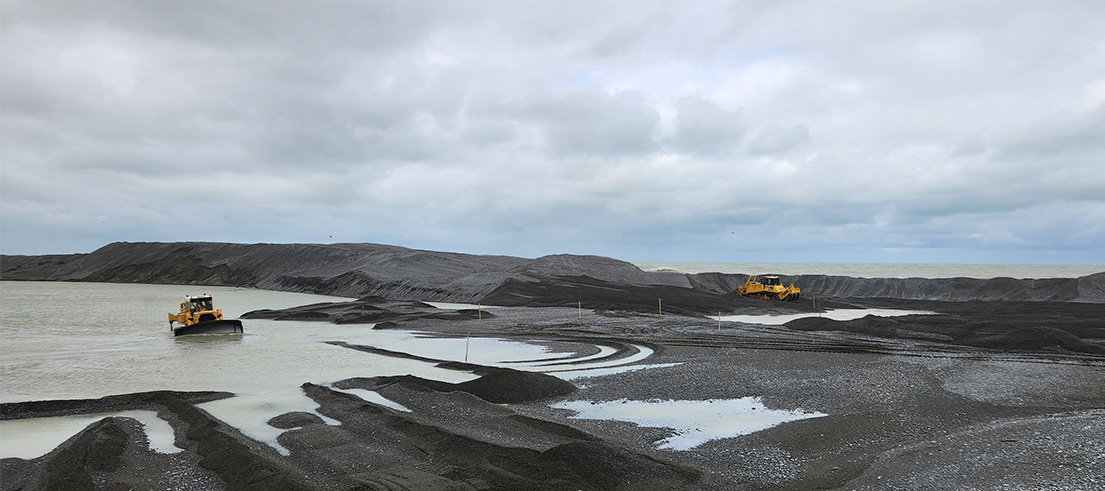
We have started the process of opening Te Waihora/Lake Ellesmere to the sea. Machinery is onsite and a sea connection will be made as soon as sea conditions allow in coming days.

Te Waihora/Lake Ellesmere is the largest lake in Canterbury and has no natural outlet to the sea. The lake is normally opened two to three times a year and closes naturally,

Openings are jointly managed by Ngāi Tahu and us and governed by the National Water Conservation Order and a suite of resource consents.

Opening Te Waihora/Lake Ellesmere

Consultation for a lake opening started on Monday 28 April and was completed by the afternoon of Tuesday 29 April, with a joint decision to open the lake when conditions were suitable. The same afternoon the lake height reached 1.13m, a level that permits opening, but it was not physically possible to carry out due to sea conditions.

The success of a lake opening depends heavily on favourable weather conditions. Wind strength, wind direction, sea swell, wave directions and the tides are all factors that can affect openings.

In difficult weather and adverse sea conditions, multiple attempts may be necessary, and a successful opening may take weeks or even months to achieve. An opening is considered “successful” when it persists for at least four days (the amount of time required on average to lower the lake level below the opening threshold).

Conditions now suitable for lake opening

With sea conditions slowly improving, we have started the process of opening the lake to the sea.

“While we’ve started the process of opening, current conditions including large sea swells mean the cut could still fill in. Opening the lake is a complex process of balancing values, safety and timing with the weather conditions,” said Leigh Griffiths, General Manager Hazards.

Attempting to open the lake at lower lake levels is also difficult as appropriate flow to the sea is required – any lower lake level opening before this event would have likely failed due to large sea swells.

“It’s not uncommon for the lake level to be high, and it isn’t always something we can prevent. Due to sea level rise and a changing climate, we will need to consider different solutions to increase flood resilience for the local communities.”

We are working collaboratively with Civil Defence, District Councils and other agencies and updating our flood warning webpage with the latest information.

For more information visit: Opening Te Waihora/ Lake Ellesmere

Teaching Council report more cause for concern

Source:

“In order to maintain the trust and confidence of teachers and other stakeholders, it is essential for the Council to act on good advice and exercise good judgement. We have ongoing concerns about the Council’s ability in this regard. The report released this week does not allay our concerns.”

Melanie Webber says the report notes several areas where the Council fell short of meeting its responsibilities. “The fact that this incident was able to happen in the first place is unacceptable; teachers and school communities entrust the Council with highly sensitive information that has the potential to be damaging if it was released publicly. The Council should have fail-safe systems, ‘guard-rails’ and processes in place to prevent incidents such as this from ever occurring. In not doing so they have failed their staff as well as the profession. 

“The report found that the process to identify and contact parties affected by the breach was rushed, and ultimately insufficient. Indeed, the independent review concludes that ‘contacting the wider group of named individuals would have been unlikely to cause harm and was likely to have supported the maintenance of trust and confidence in the Council by the profession’. 

“We’re also concerned about the report’s finding that the Council did not communicate the full extent and detail of the sensitive nature of the breach to the Education Minister’s office at the time of the incident.  When you place this report alongside the judgement of the High Court last year which found, among other things, that the Council had misled the Minister on aspects of its planned fee increase, a  concerning pattern emerges.

“A lack of confidence and trust in the Council has implications for the quality and standards of teaching. Teachers, students and everyone committed to world-class school education in Aotearoa New Zealand, deserve better.” 

Last modified on Wednesday, 17 May 2023 09:11

Introducing Rochelle Shadbolt

Source:

Having worked in Human Resources mostly in the health sector for 13 years, Rochelle Shadbolt is enjoying sitting on the other side of the table, working as a Field Officer in Taranaki and Manawatū-Whanganui regions.

“Sitting on this side of the table aligns much better with my leftist values and is very rewarding. I like helping people and supporting them through challenging circumstances. I have a lot of energy for making sure things are fair and right. It’s awesome being able to support and represent teachers, being part of making teaching a better profession to work in and helping improve public education in Aotearoa. I am a proud member of the Rainbow (LGBTQ+) community and whakapapa to Tūhoe and Ngāpuhi Iwi.

Inclusivity initiatives

Rochelle’s previous roles have enabled her to gain experience with employment processes such as disciplinary and performance matters, restructures, disputes and mediations. “I also got to do a lot of positive work supporting inclusivity initiatives for the Rainbow community, Te Tiriti partnership work and equity programmes for Kaimahi Māori, leadership development and programmes aimed at making the workplace better and improving job satisfaction for staff.

Rochelle says the biggest challenges of her Field Officer role, which she has been in since the start of Term 2 this year, involve learning the ins and outs of a whole new industry and profession. “Getting to know our collective agreements has been exciting and challenging.“ 

When she’s not working, Rochelle enjoys outdoor pursuits like rock climbing, hiking and camping. “I play drums, dance and do yoga. I like to read, game, listen to music, live where possible, and watch movies. Right now I am studying part-time at Massey towards another degree, in Psychology.

And about that surname? “Yes, Tim Shadbolt (renowned activist and Mayor of Invercargill) is my husband’s great uncle and he is a crack up at the regular family reunions we go to.”

Last modified on Wednesday, 17 May 2023 09:11

Email scam alert

Source:

There is a scam email going around that could seem to be from WorkSafe and says you owe money for overdue fees.

If you are expecting a bill from us but are unsure if the email is legitimate, you can contact us to check if it is real before you pay

Do not respond to scam emails or click any links in them. If you shared your bank details, contact your bank immediately.

The scam email might look like this:

Example of a phishing email scam

For more information about scams visit Scam Check | CERT NZ(external link)

Research – Latest insolvency report urges Kiwi business owners to heed early warning signs

Source: BWA Insolvency
Latest insolvency figures reveal a sharp rise in business failures, highlighting both challenges and opportunities for New Zealand business owners.

The BWA Insolvency Quarterly Market Report released today shows insolvency rates between January and March 2025 surged by 31% compared to the same period in the previous year. Liquidations rose by 40%, while receiverships and voluntary administrations saw a decline.
 
The report’s author, BWA Insolvency principal Bryan Williams, says that despite the data there is a path forward for those with strategic foresight.
 
“These numbers, while concerning, serve as a crucial alert for business owners to review their financial strategies,” Williams says.

 
Key Data
NZ Insolvencies Q1 2025 vs. Q1 2024 – Annual Comparison

  • Liquidations: Up from 504 to 705 (40%) 
  • Receiverships: Down from 40 to 39 (-3%) 
  • Voluntary Administrations: Down from 25 to 4 (-84%) 
  • Total Insolvencies: Up from 569 to 748 (31%) 

NZ Insolvencies Q1 2025 vs. Q4 2024 – Quarterly Comparison

  • Liquidations: Up from 666 to 705 (5.86%) 
  • Receiverships: Up from 37 to 39 (5.41%) 
  • Voluntary Administrations: Down from 6 to 4 (-33.33%) 
  • Total Insolvencies: Up from 709 to 748 (5.5%) 

Williams says the rise is partially attributed to global economic factors, including trade instabilities and market uncertainties, but is also a carryover of COVID-19 and the accumulated debt that resulted.
 
“Insolvency is always late to the party. It has a long incubation period and often doesn’t show itself until the conditions that caused it have moved on.”
 
Williams believes that amid rising insolvency rates, companies should remain vigilant in looking for ways to minimise the impact of the current turbulence. “Hedge against the potential for risk wherever and whenever you can,” he says. “By identifying warning signs early, businesses can adapt and thrive despite the economic pressures.”
 
Industries hit hardest in the last quarter were tourism, transport and delivery, construction and manufacturing. The construction industry has seen continued high rates of business failures, with this quarter’s figures showing no reprieve—insolvencies increased by 44%, up from 130 in Q1 2024 to 187 in Q1 2025.
 
“Companies with solid balance sheets can expect to ride out the challenges immediately ahead. Focusing on efficiency and innovation will be the wet weather coat for these companies.”
 
Acknowledging the impact of the current “arm wrestle” between the United States and China, Williams hopes both parties will soon recognise that fighting it out may cost more than it will gain.
 
“The best that can be hoped for is that leaders will pull back and let their respective societies grow as they will. The interplay of global tensions and local economic factors means New Zealand businesses must be agile and prepared. Our current insolvency figures are a reflection of these broader issues.”
 
Looking ahead, Williams believes there are reasons to be optimistic: “Though the short-term outlook remains challenging, New Zealand’s inherent resilience and adaptability are its greatest assets.
 
“Even one or two major projects within the country can dramatically shift business optimism, reinvigorating growth and opportunity,” he says. “Such developments can serve as a catalyst for broader economic revival.
 
“There is a road of turbulence ahead and this will damage plans that were made during more stable times. The effects will be universal and avoiding them will be like a rally driver trying to avoid potholes.
 
“Businesses that stay nimble, focus on core strengths, and prepare for future opportunities will be well-positioned when stability returns.”
 
The full Quarterly Market Report is available herehttps://bwainsolvency.co.nz/wp-content/uploads/2025/05/BWA_Insolvency-Market-Report_Q1-2025_FINAL.pdf
 
About BWA Insolvency 
BWA Insolvency is a leading insolvency firm that supports New Zealand businesses through liquidations, receiverships and voluntary administrations (VA), specialising in VA in particular.  Founder Bryan Williams has 30 years’ experience in the industry and has recently become just the second person in New Zealand and one of 200 people worldwide to be named a Fellow of global insolvency organisation Insol International. 
 
About the BWA Insolvency Quarterly Market Report
BWA Insolvency has been tracking data on liquidations, receiverships and voluntary administrations since 2012. The Registrar of Companies Office records the filings of companies that have gone into a formal state of insolvency. BWA Insolvency then does a deeper investigation to show industry trends and provide a detailed snapshot of what’s happening in the market for the Quarterly Market Report.

Climate – Warmer nights ahead with upper north wetter- NIWA’s Seasonal Climate Outlook for May to July 2025

Source: NIWA

Wetness is favoured for the northern North Island, with dryness a possibility for the western part of the North Island as well as western South Island, according to the latest Seasonal Climate Outlook for May to July 2025, issued by NIWA. 
Seasonal air temperatures are expected to be above average across all New Zealand regions, says NIWA meteorologist Principal Scientist – Forecasting & Media, Chris Brandolino.
“”Low pressure systems forming north of the country are expected to affect New Zealand and may lead to heightened risks for heavy rainfall events. In the absence of strong large-scale climate drivers, local and regional influences – inherently less predictable – are likely to dominate New Zealand’s climate over the forecast period.”
Chris Brandolino breaks down what New Zealanders can expect over the next three months. Will it be a warmer than average start to winter? Who is going to see above normal rain? And what does it mean for skiers, farmers, and hydro catchments? 

Greenpeace calls on Luxon to show leadership on dairy pollution as Canterbury floods highlight growing climate crisis

Source: Greenpeace

Greenpeace Aotearoa says that the damage caused by this week’s Canterbury floods is yet another reminder of the risk of continuing to ignore the climate crisis fuelled by the intensive dairy industry.
This week, devastating floods swept through the Canterbury region, causing many at-risk areas in the Selwyn District to evacuate, and leading to the declaration of a state of emergency in Christchurch City and Banks Peninsula.
Greenpeace Aotearoa spokesperson Will Appelbe, who is based in Canterbury, says: “The damage caused by this extreme weather event is real, and will impact communities in Canterbury into the future. But neither is this the last time we will see flooding like this in our region.
“As the climate crisis continues, we can expect to see storms like the one that battered the country this week increasing in intensity and happening more often – unless we take action to stop climate change from getting worse.
“Here in Aotearoa, the worst climate polluter is the intensive dairy industry, led by Fonterra. The oversized dairy herd is belching out huge amounts of superheating methane gas, which heats the climate much faster than carbon dioxide.”
“But as we’ve seen repeatedly in Canterbury, farmers are also among the first to directly experience the consequences of the climate crisis – with extreme weather events flooding their farms, or droughts leading to dry pastures.”
“The way farming is done in Canterbury has to change. We need to transition away from intensive dairying that harms the climate and pollutes waterways, towards more ecological, plant-based farming practices. And Fonterra and our Government need to support that transition.”
Since the 2023 election, Christopher Luxon’s Government has rolled back numerous policies that would have reduced New Zealand’s impact on the climate crisis, including several in the agricultural sector.
“Cantabrians are seeing the consequences of inaction on climate change today,” says Appelbe. “This Government’s decisions have prioritised profit for a select few over a liveable future for us all.”
“Luxon must show some leadership and reverse the anti-nature decisions he has made, particularly when it comes to our country’s worst climate polluter – the agricultural industry. Otherwise, the climate crisis will only get worse.”
Greenpeace says that some of the communities being evacuated in the wake of this flood are also dealing with nitrate-contaminated drinking water as a result of intensive dairying.
“If we change the way farming is done, we can prevent the worst of the climate crisis by reducing methane pollution from intensive dairy, and we can protect drinking water, lakes and rivers here in Canterbury, which are under threat from intensive dairy pollution.”

Education – Whitireia and WelTec Celebrate Graduates in Lively Lower Hutt Ceremony

Source: Whitireia and WelTec

On 30 April Whitireia and WelTec proudly celebrated the Whakapōtaetanga (graduation) of ākonga (students) from Engineering, Business, IT, Health, Creative, and Hospitality. The event was the second of two graduation ceremonies to be held in 2025, celebrating over 1,000 graduates.
The ceremony was opened by the cultural leadership of Whitireia and WelTec Tamaiti Whangai Mentor and Jobs Broker Tame Ngaheke (Te Āti Awa). Te Ara Whānui Kura Kaupapa Māori o ngā Kōhanga Reo o Te Awa Kairangi performers welcomed the graduands as they took their places in the Lower Hutt Town Hall and set the scene for what was a moving ceremony.
Mayor of Lower Hutt Campbell Barry and Upper Hutt Mayor Wayne Guppy (as pictured) joined the celebrations to acknowledge the achievements of the graduates and their families.
Mayor Campbell Barry said, “It’s been fantastic to join today’s celebrations and see the pride across the community. Graduation is a major milestone-not just for the students, but for the whānau and friends who have supported them. Whitireia and WelTec graduates bring real skills and talent to our city and will play an important role in shaping Lower Hutt’s future. I’m proud to celebrate with them and look forward to seeing what they achieve next.”
The ceremony ran seamlessly under the guidance of Whitireia and WelTec Jobs Broker, Tui Bradbrook, as MC. It featured inspiring speeches from special guest Vanessa Stacey, Director of the NZ Fringe Festival, and international ākonga speaker, Sonam Narayan.
Vanessa Stacey shared career highlights and commented on the importance of working hard and taking opportunities as they come.
“We live in a world where we are constantly comparing ourselves. The only real commodity that you have is in your own individuality, your own sense of self. Please hold onto that as you take these first steps into the beginning of the rest of your lives.”
Representative of the ākonga body, Sonam Narayan shared her unique experience moving from a new country to join Whitireia and WelTec, and her life-changing journey through tertiary education.
Whitireia and WelTec Executive Director Mark Oldershaw congratulated the ākonga and thanked the families, friends, and the dedicated kaimahi (staff) who have supported them every step of the way.
“We look forward to seeing these talented graduates make their mark on the world, confident that the knowledge, skills, and connections they have gained will empower them to shape a brighter future for themselves and their communities.”

Northland News – Matangirau’s new flood defences pass first major test in recent 10-year rainfall event

Source: Northland Regional Council

A small, flood-prone Northland community has withstood a 10-year rainfall event, thanks to new flood protection works led by Northland Regional Council.
Around 300ml of rain fell on the Far North’s Matangirau catchment during Ex-Tropical Cyclone Tam, the most rain recorded in the area in a decade and almost twice the rainfall recorded across Northland.
Flood protection measures were installed last year at Matangirau as part of the $5.735 million Flood-Resilient Māori Communities and Marae project.
The project (funded by the Local Government Flood Resilience Co-Investment Fund and NRC) aims to reduce flood risks for six flood-affected Māori communities (Kawakawa, Otiria-Moerewa, Kaeo, Matangirau, Whirinaki and Punuruku) and 35 marae across Te Tai Tokerau.
Local Robert Rush said prior to the flood works, his whare was always the first to flood when there was heavy rainfall.
Their local marae would also always go under water.
Yet after the flood mitigation works undertaken by NRC, Rush said, the results had been fantastic.
“It’s been a work in progress, especially showing our whānau that the council were only there to help and not to steal our land,” Rush said.
“We’ve had stop banks and river works done around our homestead and it hasn’t flooded since.
“We also had some work done just a couple of weeks before ex-Cyclone Tam, which was perfect timing because we didn’t flood during that time either, nor did my grandfather’s house which is near the new marae.”
NRC Te Ruarangi (Māori and council working party) Whangaroa hapū representative and Matangirau haukainga Nyze Manuel agreed the benefits of the flood works were obvious.
She said the mahi of Te Ruarangi had also played a critical role in the activation and front line of Māori communities during these times.
“Well we’re not under water, so that’s awesome!” Manuel said.
“Through our Te Ruarangi network we were able to get out communications to people about the weather in a fast and efficient way.
“And as more flood works are done by NRC, we’ll see less flood water in these vulnerable areas.”
Matangirau’s flood mitigation is based on an engineering method called ‘floodway benching’ designed to reduce flood risk for homes and the marae upstream of the Wainui Road Bridge.
A 1960s rebuild of the bridge (which raised the bridge and approaches by about two metres above the existing flood plain) unintentionally worsened flooding by creating a ‘detention dam’ effect during heavy rainfall, capturing and holding excess water during heavy rainfall events.
As a child, Rush said he didn’t recall any flooding until the local road and bridge works were completed.
“We’ve had a whole lot of issues and have moaned about that for years, that’s why we built our whare where it is now because it never used to flood there,” he said.
“That’s why it was essential to get the flood works done as we’ve been flooded 3-4 times now and are no longer able to insure our house.”
The new benching works aim to reverse this damage by giving floodwaters more space to spread out, allowing more water to flow under the bridge.
This proven approach, used successfully in Awanui, maintains the river channel while adding a higher, wider ‘bench’ for safer floodwater flow.
Northland Regional Council Rivers Manager Joe Camuso said the recent weather event had proven the value of investing early in communities like Matangirau.
While it wasn’t a ‘miracle’ cure for flooding, Camuso said it had made a significant improvement on the impact of heavy rainfall to the area.
“What we’re seeing now is the flow regime is much more efficient, so we’re seeing more water flowing under the bridge, which means less flooding during large rainfall events,” Camuso said.
“While this is great, it is only built to withstand up to a 50-year flood event, of which there is only a two per cent likelihood each year.”
Flooding remains one of Northland’s most damaging and frequent natural hazards, impacting social, economic, and cultural wellbeing.
For Māori communities, the risk is particularly acute, with marae often located in low-lying, flood-prone areas.
During past storm events like Cyclone Gabrielle, widespread damage was seen across Māori communities, particularly to papakāinga (communal housing) and low-income areas.
Ensuring marae were more resilient, Camuso said, would mean more communities would be better off moving forward.
“In a flood event, marae become like a defacto civil defence hub, which often need to house and protect local whānau impacted by floodwaters,” he said.
“In the past week we’ve received so many emails from marae we’ve worked with, thanking us and telling us of the benefit they’re already seeing from the flood protection works.
“I’d like to thank the local whānau and hapū who have worked with us to ensure these flood works are a success.”
Rush said he too was grateful for the support from NRC to help flood-proof their whenua.
“Joe and his team have been a big part of this from early on and have been awesome over the years, which has really benefitted our whānau in the area.”
The flood resilience initiative not only focuses on physical protection like benching and stop banks but includes emergency planning, community-led adaptation, and exploring options for relocating the most vulnerable marae.
Site works across the region began in December 2023, with practical completion expected by mid 2025.
A video taken outside the Rush whānau homestead during the peak of the rainfall during ex-Cyclone Tam