Police arrest senior Comanchero leader

Source: Tairawhiti District Health

The last of the Comanchero Motorcycle Gang leadership group not facing charges, is now facing court over two major investigations into drug importations.

Police have charged the National Vice President in relation to offences linked to the importation of methamphetamine and cocaine into the country.

Assistant Commissioner: Investigations Paul Basham says every member of the gang’s leadership is now facing serious charges.

“This is a significant milestone and represents years of relentless investigative work to disrupt and hold the Comancheros to account for criminal activity.

“There is no doubt that this sustained enforcement activity has had considerable impact on the gang’s ability to conduct their offending.”

The 36-year-old man was arrested in Howick yesterday.

Assistant Commissioner Basham says members of the National Organised Crime Group were there to make the arrest.

“This man has been charged over the investigation into the importation of methamphetamine at the Port of Tauranga in December last year,” he says.

“He has also been charged over offending linked to the importation of cocaine into New Zealand earlier this year.

“It will be alleged that this man played a significant role in working across transnational organised criminal groups with these importations.”

This week’s arrest comes off the back of three major investigations which culminated at the end of 2024 with nearly every Comanchero member facing criminal charges.

Assistant Commissioner Basham says: “This is tenacious investigative work and I’d like to acknowledge the investigation staff based in Auckland and the Bay of Plenty.

“We have not wavered in enforcing the law with gangs and organised criminal groups who are causing a high level of harm in communities right across this country.”

The 36-year-old man will appear in the Auckland District Court today charged with importing methamphetamine, attempted possession of cocaine for supply and participating in an organised criminal group.

  • Background notes for editors:

– Operations Avon, Scuba and Embargo targeted the Comancheros over a three year period
– Those investigations resulted in 137 charges laid against the gang’s members and associates
– Operation Bridle saw four arrests over the alleged importation through the Port of Tauranga
– Three men are before the Auckland District Court over the importation of cocaine earlier this year

ENDS. 

Jarred Williamson/NZ Police

Implementation of Phase Two of Mental Health Response Changes to start

Source: Tairawhiti District Health

Police and Health NZ have completed Phase One of the Mental Health Response Change Programme and are preparing to begin Phase Two.

Phase One of the joint agency approach commenced on 4 November 2024, and Phase Two was initially set to start on 31 March 2025.

With Phase One complete, Phase Two will now start from 14 April with both agencies agreeing to a staged implementation across districts.

Each district has been assessed for their readiness to implement the next phase, and as a result, districts will have varying starting points for the rollout.

Moving the start of this phase by two weeks was recommended by the Mental Health Response Change Programme Governance Group (including Police, Ministry of Health, Health NZ, and Ambulance agencies), to allow districts to be ready.

Police Assistant Commissioner Mike Johnson says one of the challenges agencies faced was discrepancies in the way section 109 of the Mental Health (Compulsory Assessment and Treatment) Act 1992 was interpreted with regard to handovers of detained person in emergency departments.

“We now have Crown Law advice which provides the much-needed clarity on section 109 for Phase Two to commence.”

The Police districts that will commence with Phase Two on 14 April are: Waitematā, Counties Manukau, Waikato, and Tasman (excluding Kaikoura). This corresponds to Health NZ’s Waitematā, Counties Manukau, Waikato (excluding Tokoroa and Taumarunui), Nelson-Marlborough, and West Coast districts.

Police and Health NZ will be working closely with these teams and districts to support their preparation for the changes, and will continue work with other districts to get them ready to start Phase Two.

“The safety of police and healthcare staff, and those in our community impacted by these changes, is a priority for us as we move forward,” Assistant Commissioner Johnson says.

“Police will always respond when there is an offence or an immediate risk to life or safety and this will not change.”

Health NZ Director of Specialist Mental Health and Addiction Karla Bergquist says Police and Health NZ, along with the Ministry of Health, Hato Hone St John, and Wellington Free Ambulance, have been working closely together on how agencies respond to mental health.

“At the heart of these changes is ensuring people receive the right mental health care at the right time, and their safety and that of kaimahi delivering that care is paramount,” Ms Bergquist says.

“This is why agencies have committed to safely phasing in these changes and working together to make adjustments to implementation timeframes when necessary.”

The Phase Two changes remain the same and include:

  • 60-minute handover detained persons in EDs – Police who have detained a person under the MH Act and transported them for an assessment will remain in the ED for a maximum one hour before departing, unless they consider there is an immediate risk to life or safety.
  • Changes to mental health assessments in custody – If someone is placed under the MH Act while in a Police custody suite, they will need to be taken to a health facility within 30 minutes. Custody rules will ensure people in distress are assessed appropriately, preferably in a health setting.

“We are committed to working together towards a system that supports everyone’s mental wellbeing, so people are supported to stay well, and have access to help that works for them.”

Note: NZ Police and Health NZ districts are not the same (Police has 12, Health has 20), so there are some parts of a Police district which are not included in the comparable Health NZ district or vice versa.

ENDS 

Police media contact: media@police.govt.nz
Health NZ media contact: hnzmedia@health.govt.nz

The pointy end of police work

Source: Tairawhiti District Health

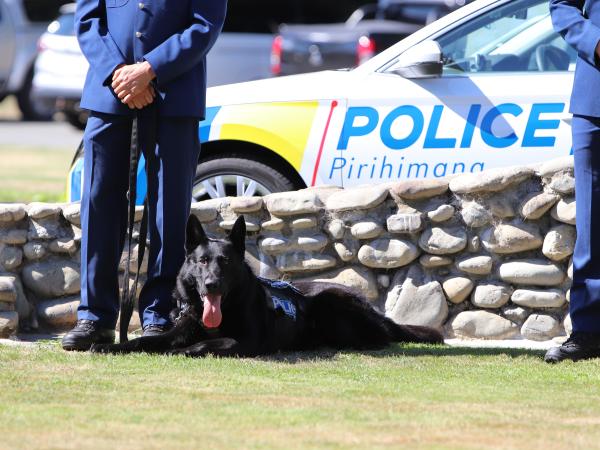
Police Commissioner Richard Chambers welcomed six new patrol dog teams after their graduation today at the Police Dog Training Centre at Trentham, Upper Hutt. 

Alongside them also graduating were three personnel from 2nd Engineer Regiment, 2 Field Squadron Unit with three newly trained Explosive Detector Dogs (EDD).

The teams celebrated the occasion in front of whānau and friends, the Commissioner of Police with members of the police executive, and Lieutenant Colonel Joe Totoro Commanding Officer, 2nd Engineer Regiment, New Zealand Army.

Commissioner Chambers congratulated them all on their achievements.

“All our patrol dog teams play a crucial role in frontline policing, deploying to some of the most dynamic and challenging situations. We couldn’t police the way we do without them.

“That’s why I’m thrilled to see six newly trained dog teams graduate today. They will be welcomed into Eastern, Central, Waikato, Wellington, and Auckland police districts very soon.”

Graduating from the police patrol dog course is one new and five experienced handlers with their dogs. 

Wellington-bound Constable Nick Press with Police Dog ‘Oskar’ says, “It feels different this time around being my second operational dog after working ‘Ink’ for the past six years. It’s exciting to get back on the street with a new young dog who is very different to ‘Ink’ and has taught me a lot and given me more skills as a handler.”

Constable Pete Smits is heading back to the Waikato. “I got Ozark at the start of November last year, and I’ve enjoyed training him and getting him as ready as possible for the reality of what police delta teams do. I’d like to acknowledge the Waikato Dog Section for helping me get to this point in my career.”

Inspector Todd Southall, National Coordinator Police Dogs, says “It’s a proud day for all teams, both experienced and new.  This ceremony marks the end of a demanding few weeks training to become an operational team and well done on completing all the tests which replicate your day-to-day work.

Patrol dog work is one of the most physically demanding roles in Police – you’re at the pointy end of frontline policing and a pivotal component in our Tactical Response Model. We are grateful for all your work, and this graduation signals the next step toward frontline duties” says Todd.

ENDS

Issued by Police Media Centre

Watch out for our Ten One story coming soon with more images and stories about the police dog teams from this graduation.

90 recruits join Wing 386

Source: Tairawhiti District Health

The 90 recruits of Wing 386, alongside their patron Dame Noeline Taurua, were welcomed to the Royal New Zealand Police College (RNZPC) last week.

“The constabulary recruiting team has worked incredibly hard to deliver 90 recruits onto Wing 386 and we are really happy to have increased our wing capacity sooner than initially planned,” 500 Programme Director, Superintendent Kelly Ryan says.

“Other groups within Police providing specialist services to some of our recruiting processes such as Emergency Communication Centre, Vetting and Safer People have provided additional support to make this possible.”

Last year Police announced it would increase the potential capacity of recruit wings at the RNZPC from 80 to 100 from April 2025. The change was in response to a major surge in applications and will help ensure quality applicants move through the pipeline and into training faster.

Since the announcement, changes have been made to the RNZPC to facilitate the larger wings.

“Enabling even 10 more recruits to join a wing is a significant jump and required a lot of planning and additional support for training. We look forward to welcoming even more recruits in our wings of up to 100 in the months ahead,” Superintendent Ryan says.

“The median time between application and starting at RNZPC has already reduced by more than 90 days over the last year.

“We’re focused on making sure our process is fit-for-purpose, so applicants flow through each step quickly and our standards continue to be robust.”

The increased capacity at the RNZPC, and a training facility to come in Auckland soon, will support Police’s work to deliver on the Government’s commitment of 500 additional officers.

“Achieving this growth in recruits requires a huge effort from across the entire organisation for attracting, selecting, and training the new officers,” Superintendent Ryan says.

“Research is very clear, the most effective way to recruit police officers is through our own staff identifying, encouraging, and supporting people they know would be great to apply.

“It’s critical that everyone leans in on this, so we get the very best people into our organisation.”

Districts have also demonstrated strong support by putting in place at least one full time constabulary member to actively engage and take ownership of their district’s recruiting.

“Whether you’re taking your first steps into the workforce or considering a career change, the best time to apply is right now.

“The earlier you apply, the sooner you’ll be ready to start your training into a one of the most rewarding careers there is,” Superintendent Ryan says.

ENDS

Issued by the Police Media Centre

Media Advisory: Dog graduation

Source: Tairawhiti District Health

New Zealand Police will host the latest dog graduation on Thursday 27 March at 1pm. 

Handlers and their dogs will be celebrating in front of whānau and friends and members of the New Zealand Police executive and the New Zealand Army. 

Graduating from the police patrol dog course are ‘Delta’ teams from Auckland, Waikato, Eastern, Central, and Wellington Districts.

Also graduating from their Explosives Detector Dog (EDD) course are three handler and dog teams from No 2 Field Squadron.

Media are invited to attend the prizegiving which starts at 1pm at the Police Dog Training Centre, Dante Road, Trentham. 

Please arrive at 12.45pm and RSVP attendance to:  media@police.govt.nz

ENDS

Issued by Police Media Centre

Great work towards keeping communities safe

Source: Tairawhiti District Health

Ten years of methamphetamine production uncovered, our recrutiment campaign wins prestigious awards and Te Pae Oranga continues to expand.

Operation Dynamo – uncovering ten years of methamphetamine production

Congratulations to the National Clandestine Laboratory Response Team and their investigation into the illicit possession and supply of the precursor material, hypophosphorous acid.

Hypophosphorous acid has no known household use and is an extremely dangerous product.

It is believed the alleged offending dates back 10 years. The potential harm is immense and the street value of the methamphetamine which could be produced runs into millions of dollars.

This is a complex case covering a long time period and investigation is still ongoing. To date a total of $1.725million of assets including property, land, vehicles and a boat have also been restrained.

A 50-year-old man has been arrested in Hamilton and charged with four counts of supplying material for the manufacture of methamphetamine and four charges of possession of material with intent.

This is a great job by all of our staff involved to track the source of these materials.  I would also like to thank the New Zealand Customs Service for their support.

Recruitment video sweeps international awards

I was pleased to hear that following the launch of our viral World’s Most Entertaining Recruitment video last year, it has won a pair of prominent international awards – at Cannes!

The video won a silver award for use of social media and a bronze for PR activation in the Cannes Lions awards. What’s most impressive is that there were up to 3,000 other entries in each category from all around the world.

The work we do to increase our diversity and on our recruitment campaigns is so important to attracting the right people to Police. Our goal is to reflect the communities we serve so we’re increasing diversity as part of recruitment efforts to hire an extra 1,800 new police. It’s awesome to see our recruitment campaign is attracting so much attention.

Read more here: http://www.police.govt.nz/news/ten-one-magazine/video-scoops-more-awards.

Te Pae Oranga Hawke’s Bay launch

Last week we launched the Hawke’s Bay Te Pae Oranga Iwi/Community Panel. This is the second panel for Eastern District and the 10th panel nationwide.

These panels are proving to be extremely effective in our communities and a great way to engage victims, offenders and the community as a whole to help address low level and recidivist offending.

The holistic approach the panels offer ensures victims are heard and catered for and the causes of the offending are addressed.

You can expect to see more of these launched right across New Zealand in the coming months.

Read more here: http://www.police.govt.nz/news/release/hawke%E2%80%99s-bay-te-pae-oranga-iwicommunity-panel-launched


Subscribe to the Commissioner’s blog.

New Zealand Police not moving to routine arming

Source: Tairawhiti District Health

New Zealand Police is not moving to routine arming of its frontline staff.

You will be aware that the issue of routine carriage of firearms has been subject to a range of media commentary over the weekend.

The safety of our staff and the public will always be paramount but I do not believe routine arming is the right path for our organisation.

The current debate follows a decision by Canterbury District Commander Superintendent John Price last Thursday for level one responders in Canterbury to carry firearms during the search for a high-risk offender.

I absolutely supported his decision. Thanks to good work by Canterbury staff, that offender was located yesterday and the firearms order was immediately lifted.

We know that a local order like this happens occasionally. It is a tactical response under our TENR risk assessment and decision-making framework to a specific risk identified to staff and public safety. The order is reviewed on a shift-by-shift basis and is lifted – as in Canterbury – as soon as it is deemed no longer necessary.

Nevertheless this particular decision has prompted speculation that full arming of Police is on the agenda. I would like to be absolutely clear that this speculation is incorrect.

I’m conscious that there is a range of opinions on this, among the general public and within Police. I’ve been in Police for 41 years – most of it on the front line – and I’ve seen changes in the policing environment.

However, routine arming would fundamentally change our relationship with the New Zealand public, and it would have a significant impact on the trust and confidence which we have worked hard to build.

I believe we are in the right place in our current operating environment.

Ours is one of the most well-equipped police services in the world: giving our staff the tools they need to do their jobs is essential to our mission to be the safest country.

This is not just about firearms – we are in the process of rolling out new body armour to all our frontline staff, which is a major investment in our people’s safety. All frontline staff deploy with Tasers, a decision taken in 2015 to give them another option for keeping themselves and members of the public safe.

Meanwhile, frontline staff have greater access to firearms than ever before for the most extreme situations, with Glock pistols and Bushmaster rifles secured in their vehicles.

We are implementing a programme to give us a better understanding of the policing environment around firearms in the community. The more data we have on firearms and other risks, the more we can do to enable our people to carry out their duties safely. We are continuously enhancing firearms training for frontline staff.

We police with the consent of the public, and that is something that as a Police service we should cherish and preserve.


Subscribe to the Commissioner’s blog.

Police continue to disrupt organised crime

Source: Tairawhiti District Health

Police disrupt significant organised criminal activity, recruitment is underway in Kapiti and Kosmo is on the mend. 

Operation Gegenees

Congratulations to our National Organised Crime Group, together with NZ Customs, for their work on Operation Gegenees.

This successful operation saw five individuals arrested, who were heavily embedded in organised crime, including a senior associate of the Comanchero Gang. It also led to the seizure of 13.5kg of methamphetamine.

This operation demonstrates Police’s ongoing commitment to disrupting organised criminal activity and hold those who commit, and enable, this behaviour to account.

Kapiti recruitment underway

We aspire to be the world’s safest country and have the trust and confidence of all. To achieve this, our commitment to service must be central to everything we do. So this year we’re setting ourselves up to transform the way we provide our service to the public.

Recruitment is now underway for the new Police non-emergency communications and digital centre in Kapiti, north of Wellington.

We are aiming to have 50 new staff prior to Christmas, building to 120 by the end of 2019. These new roles have been established as part of wider work to improve the way NZ Police provides its service to the public.

This centre will significantly increase our capacity to meet the increasing demand Police face and is a key step as we prepare for the introduction of one non-emergency number for the whole country, as well as expand our online crime reporting services.

This is all in addition to building our frontline because we know the public still want to engage face-to-face with local police in their community.

Kosmo is on the mend

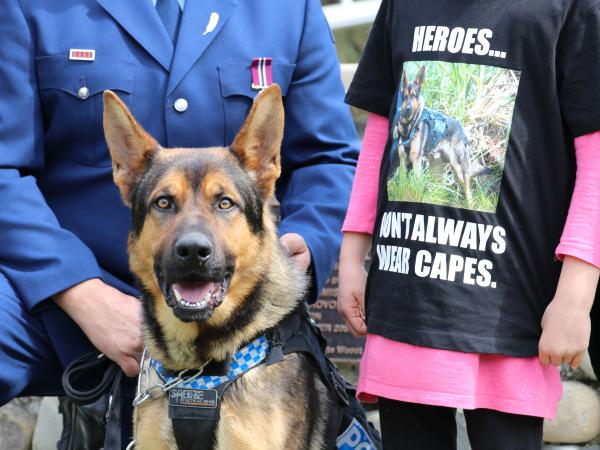
I’m pleased to hear that Kosmo is on the mend after being injured while preforming his duties earlier this month.

The dog team is an integral part of NZ Police’s operational response and when a dog is wounded in the course of duty, we feel this as keenly as if it was one of our human colleagues.

We’re all looking forward to having Kosmo back at work when he’s fit and ready.


Subscribe to the Commissioner’s blog.

Changing the way we respond to Family Harm to help New Zealanders when they need it

Source: Tairawhiti District Health

Family Harm continues to remain a significant issue for far too many New Zealanders. 

Family Harm is a term Police use to capture a broader, more holistic view of the issues occurring within families and their ensuing detrimental effects. It acknowledges the harm caused by the environment and destructive behaviours which often have long-term damaging consequences for families. It also acknowledges that violence is just one subset of the harm experienced by some families.

Our mission to be the Safest Country includes doing things differently to improve our response to family harm so we can help and support people when they need it.

I’m very pleased to announce that our new approach to Family Harm went live in the early hours of yesterday.

We’ve made these changes because we want to deliver a better service to people experiencing family harm. We believe these changes will make a real and tangible difference for victims and will also help partner agencies and NGOs who involved in providing family harm services.

When staff now attend a Family Harm investigation they’ll do so with “eyes wide open”.  This is about all about understanding the wider dynamics of family harm – the patterns of harm and the adverse circumstances in which they occur.  This new approach will help us make the best decisions when responding to family harm and ensure we get better outcomes for the people involved.

To support the new approach our staff have been given new training, technology and a range of tools to ensure they can carry out high quality family harm investigations each and every time we get a call for service.

Equally, the approach will provide better quality information to partner agencies and NGOs who are involved in providing family harm services for victims and perpetrators.

I encourage anyone who fears for their own, or someone else’s safety to dial 111. Do not ignore family violence, you could save a life.

Ngā mihi

Mike Bush, MNZM

Commissioner


Subscribe to the Commissioner’s blog.

New Zealand Police – Delivering the best service

Source: Tairawhiti District Health

New Zealand Police is embarking on a programme of work to transform our service to the public.

We aspire to be the world’s safest country and we have a goal of achieving 90 percent trust, confidence and citizen satisfaction by 2021. Our current level of trust and confidence sits at 78 percent, high by some standards, but we have work to do to get to 90 percent.

We know one of the biggest drivers of trust and confidence is when people get good quality service from us. While we are skilled at policing and responding to emergency situations, we are too often left wanting in regards to the level of service we aspire to in non-emergency situations. We know when people try to contact us for support or advice – at local stations, by telephone or online – they suffer an outdated and frustrating experience.

All New Zealanders deserve to be served by a modern 21st century police service. A Police that is first class; that can engage and interact with the public in whatever way that best suits them, whether it’s an emergency or not. If we want our communities to trust us, we must put the public at the heart of our service, and make it easier for people to engage with us for help, advice, and support.  Our commitment to service must be central to everything we do.

We want to be much better at this part of our job. So this year we’re setting ourselves up to transform the way we provide our service to the public.

We’re using more technology to create faster, anytime, anywhere policing services.

We’re creating more options for the public to get in touch with us, such as online reporting, one non-emergency number for the whole country and diversifying and growing our public presence in communities, including increasing the number of mobile police bases.

We’re streamlining processes behind the scenes to ensure the public receive the service they expect – the service they deserve.

We also know that it’s our people that are critical in making every contact count so we’ll increase our overall resources in this area, provide consistent training and change the way we work.

Once we’re done, no matter where they are, who they are, or how they contact us, the public will receive the same excellent standard of service.

New Zealand Police is already world-leading in its use of technology. Over the past five years we have introduced new ways of working, and new mobile technology and communication systems for our frontline staff. We wanted our officers to spend less time filling out paperwork and more time working with people. This internal transformation freed up the equivalent of 354 frontline officers in time savings.

We know we can be successful in transforming our business in this way, and we’ve seen the benefits. We are now going to apply the same focus and energy to transforming our service delivery.

I want to be clear that this is all about increasing the choices available to the public about how, where and when they contact us. We know that across the country people still want to engage face-to-face with local police in their community, so making sure that we are even more visible around the country will also be a vital part of the way we deliver a better policing service to everyone. As part of that over the next four years, as announced in 2017, an extra 880 new police officers will be coming to work in communities across New Zealand.

However, we know that people also want us to be accessible through other channels and we have not kept up with public expectations in our provision of digital services. We have set an aspiration to be world-class in terms of digital access. Beginning later this month we’re seeking your feedback through workshops, and an online survey to gather information about how you want to interact and engage with us. We need help from the public so we can understand how they want digital access to work. We’ll use this information, to ensure our systems are customer-focused and intuitive.

We’re interested in what you, the public, think. Send us your ideas or feedback on how we can make it easier for people to get help, advice and support from NZ Police to haveyoursay@police.govt.nz.


Subscribe to the Commissioner’s blog.