Release: The Austerity Budget that leaves women out

Source: New Zealand Labour Party

Today’s Budget is a masterclass in making the wrong decisions for New Zealanders.

“After a year of job cuts, now we are on to pay cuts and stealing from our kids’ retirement funds,” Labour Leader Chris Hipkins said.

“The Government has taken $11 billion that should be lifting women’s pay and used it to make its budget add up.

“Christopher Luxon’s decision to cut the Government KiwiSaver contribution will steal $66,000 from the retirement savings of an 18-year-old entering the scheme today.

“Women, young people and the working public are paying for handouts to landlords, multinationals and tobacco companies. Today we can add oil and gas companies to that list.

“With the cost-of-living pressure reaching crisis point, this Government is offering some families a measly $7 a week. That won’t even buy a block of butter.

“Last Budget Nicola Willis made a choice to borrow $12 billion for tax cuts which haven’t delivered for Kiwis. It’s time she took some responsibility.

“We don’t know if a single family has received the $250 she promised last year, so why should Kiwis believe her this this year?

“She is choosing austerity to make up for her poor fiscal management.

“More people are homeless, more children are going hungry and women are going to be paid less. That’s what Nicola Willis and Christopher Luxon will be remembered for,” Chris Hipkins said.


Stay in the loop by signing up to our mailing list and following us on FacebookInstagram, and X

Release: Bills increase transparency of money transfers and ports

Source: New Zealand Labour Party

Two Labour bills drawn from the Member’s Ballot today would require greater transparency of international money transfers, and bring more public accountability and transparency to port companies.

“Too many families are losing money to hidden fees when they send remittances overseas. That’s not fair, especially with the cost of living rising,” Arena Williams said.

“My Financial Markets (International Money Transfers) Amendment Bill will require banks and other money transfer services to be upfront about their fees, exchange rates, and commissions. Consumers should know exactly what they’re paying, before they send a cent.

“New Zealanders pay more for international money transfers than people in Australia and other countries. My Bill is especially important for Pacific, Filipino, Indian and other migrant communities who regularly use remittance services to support loved ones abroad.

“Banks and finance companies charge for these services in a way most consumers won’t understand. It’s not clear, it’s not fair, and it hits working families hardest.

“This Bill is about making banking fairer for everyone, whether you’re sending money home to support family or making a purchase online in a foreign currency. Labour is on the side of consumers, not the banks.”

The Bill would:

  • Require full disclosure of all fees, commissions, and exchange rates before a transfer is made
  • Ensure the total cost of a transfer is clearly displayed, including markups
  • Stop banks and providers from hiding charges in fine print

“This is an important step in bringing down everyday costs for families – starting with banking. Everyone deserves to know what they’re paying,” Arena Williams said.

Lemauga Lydia Sosene’s Local Government (Port Companies Accountability) Amendment Bill would bring more public accountability and transparency to publicly-owned port companies.

“Currently, publicly-owned port companies are immune to Local Government Official Information and Meetings Act requests which limits their public accountability. This Bill would change that and give local communities greater transparency around decisions that could affect their lives,” Lemauga Lydia Sosene said.


Stay in the loop by signing up to our mailing list and following us on FacebookInstagram, and X

Gulf Harbour homicide: Fourth person charged

Source: New Zealand Police

Following a gruelling 14 month investigation, Police have today charged a fourth person in relation to the death of a woman whose body was found in a bag in Gulf Harbour last year.

The body of 70-year-old Chinese woman Shulai Wang was found in a black rubbish bag in the water in Gulf Harbour on 12 March 2024.

Acting Inspector Tim Williams, Waitematā CIB, says officers attended an Orewa property this morning where one person was taken into custody.

“A 64-year-old man was arrested and has been charged with manslaughter and kidnapping and will appear in court tomorrow.”

This is the fourth arrest in relation to this matter.

A 37-year-old man, a 36-year-old woman and a 61-year-old woman are each facing charges of kidnapping and manslaughter

The 64-year-old man will appear in North Shore District Court tomorrow.

As the matter is before the court Police are limited in providing further comment.

ENDS.

Holly McKay/NZ Police

More funding to cut court case backlogs

Source: NZ Music Month takes to the streets

Court case backlogs will be further reduced through extra funding to improve court timeliness and access to justice, Justice Minister Paul Goldsmith and Courts Minister Nicole McKee say.

“Justice delayed is justice denied. Waiting months or years for a case to be resolved only adds to the frustration and trauma for victims and, indeed, all court participants,” Mr Goldsmith says.

“While there has been progress, it’s really important that we keep things moving. This funding will to do exactly that.”

Budget 2025 will provide New Zealand’s courts with $246 million of additional funding over the next four years.

“This funding will support the ongoing operation of specialist courts, tribunals, the District Court, senior courts, the Coroners Court, and the legal aid system.”

“This Government is supporting the courts to be more efficient and minimise delays, to ensure everyone can navigate the process smoothly and have trust and confidence in the system,” Mrs McKee says.

“An efficient court system that delivers timely justice is an important part of the Government’s plan to restore law and order. Through Budget 2025 we are making sure we keep our foot on the pedal.”

In the year ending 31 March 2025, cases disposed of within expected timeframes has stabilised at 81 per cent, after almost a decade of declining timeliness.  

Backlog cases have decreased by 9 per cent to 7,067, while active cases decreased by 3 per cent to 37,920, with a reduction of 1,074 cases on hand.

Disposals of district court jury trials are at historically high levels, reflecting the approach of applying additional resources to reduce the post-Covid backlog of trials in Auckland courts. 

Investing in local journalism

Source: NZ Music Month takes to the streets

New funding will ensure New Zealanders have access to independent local journalism that keeps them informed about what’s happening in their communities, Media Minister Paul Goldsmith says.
“Regional journalism helps keep communities informed and holds decision-makers to account. 
“Budget 2025 will invest $6.4 million over four years in council, community and court reporting across New Zealand. The funding will be distributed through NZ on Air.
“Open Justice and Local Democracy Reporting have been successful programmes with an emphasis on reporting, rather than opinion. This funding expands them. 
“It will get funding into regional newsrooms so that more local frontline journalists can report on the things that matter to their audiences. 
“Budget 2025 also adjusts Radio New Zealand’s funding. 
“RNZ has had funding increases in recent years, most notably a boost of $26 million a year in 2023, on top of a previous increase of $7.3 million per year in 2020.
Budget 2025 reduces RNZ funding by approximately $18 million over four years, or $4.6 million a year, equivalent to approximately 7 per cent of its annual Crown operating Budget of $67 million. 
“This savings initiative recognises that government-funded media must deliver the same efficiency and value-for-money as the rest of the public sector. 
“I expect RNZ to improve audience reach, trust and transparency. I am confident the organisation can do so while operating in a period of tightened fiscal constraint.
“This comes as the Government considers how it can modernise media legislation through its Media Reform package. 
“New Zealand media, like media around the world, continue to face significant challenges. We need modern legislation, so the media sector is financially sustainable in the years to come. 
“I am considering submissions from the recent consultation on media reform. I will have more information on next steps for media modernisation in the coming months,” Minister Goldsmith says. 

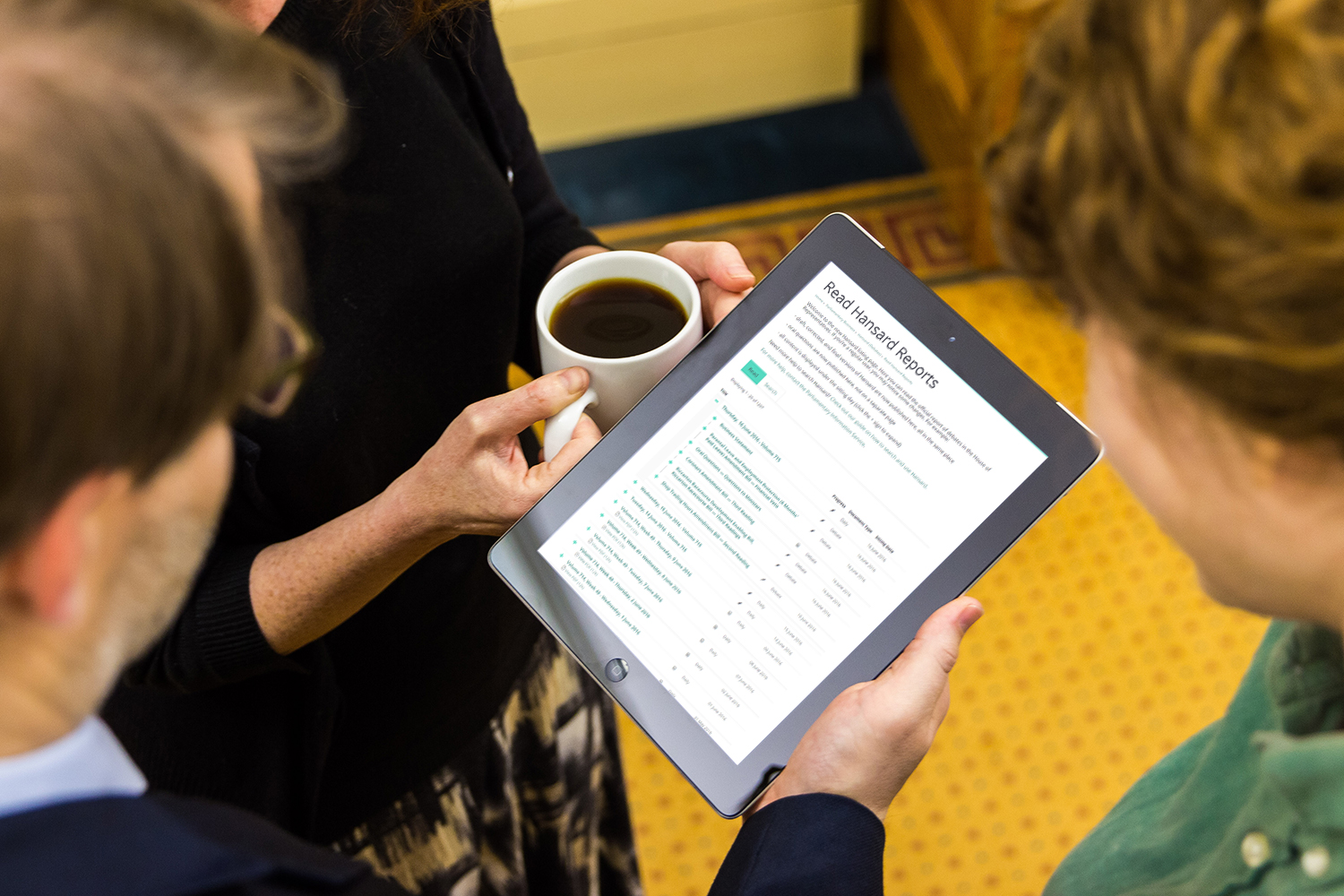
Parliament Hansard Report – Petitions, Papers, Select Committee Reports, and Introduction of Bills – 001481

Source: Govt’s austerity Budget to cause real harm in communities

PETITIONS, PAPERS, SELECT COMMITTEE REPORTS, AND INTRODUCTION OF BILLS

SPEAKER: A petition has been delivered for presentation.

CLERK: Petition of Shane Clarke Witehira requesting the House urge the Government to decline Fast Track Application 229 to build a 200-250 berth marina at Waipiro Bay.

SPEAKER: That petition stands referred to the Petitions Committee. No papers have been delivered. A select committee report has been delivered for presentation.

CLERK: Report of the Education and Workforce Committee on the briefing on the 2023/24 performance, current operations, and strategic intentions of Immigration New Zealand.

SPEAKER: The bill is set down for consideration. The Clerk has been informed of the introduction of four bills.

CLERK:

  • Appropriation (2024/25 Supplementary Estimates) Bill, introduction
  • Military Decorations and Distinctive Badges (Modernisation) Amendment Bill, introduction
  • Financial Markets (International Money Transfers) Amendment Bill, introduction
  • Local Government (Port Companies Accountability) Amendment Bill, introduction.

SPEAKER: Those bills are set down for first reading.

Rates relief for up to 66,000 more SuperGold cardholders

Source: NZ Music Month takes to the streets

Budget 2025 will help up to 66,000 more SuperGold Cardholders with their rates payments, Local Government Minister Simon Watts and Seniors Minister Casey Costello announced today.

“It’s a really tough time for many Kiwis right now and this Government is working at pace to grow the economy so we can take some of the financial pressure off households and ease the cost of living,” Mr Watts says.

“We are seeing good progress in our economy with inflation and interest rates coming down, but we want to do more to relieve the financial burden for households, including for older New Zealanders.

“That’s why we’re making changes to the rates rebate scheme for SuperGold cardholders.”

The Government will introduce a new income abatement threshold to assist SuperGold Cardholders from July 1. The income abatement threshold to be eligible for the maximum rebate for SuperGold Cardholders and their households will be lifted from $31,510 to $45,000 – about the rate for a couple receiving superannuation. The maximum rebate for the scheme will also increase from $790 to $805.

“This is the first time we are introducing a separate income abatement threshold to the Rates Rebate Scheme, Seniors Minister Casey Costello says.

“It will mean that every SuperGold Cardholder earning only NZ Superannuation, with rates higher than $2000, will be eligible for the full rebate. SuperGold Cardholders earning more than $45,000 may also be entitled to a smaller rebate.”

“These changes, worth $154 million over four years, will come as a relief to those seniors who are on fixed incomes and are dealing with rates increases.”

The National Party and New Zealand First coalition agreement had a commitment to explore options to build on the Local Government Rates Rebate Scheme for SuperGold cardholders and to maximise the benefits of the SuperGold Card.

“The Rates Rebate Scheme is administered by local councils and provides financial relief for low-income New Zealanders owning their own home,” Mr Watts says.

Ratepayers can apply for the new maximum rebate under the new abatement thresholds after 1 July 2025.  Application forms will be available from councils and will also be able to be downloaded from the New Zealand Government website (www.govt.nz) and then submitted to local councils after 1 July 2025.

“If over-65s have questions about eligibility they can contact their council or retirement village operator,” Ms Costello says.

KiwiSaver changes to encourage savings

Source: NZ Music Month takes to the streets

“Budget 2025 improves KiwiSaver to encourage Kiwis to save more for their first home and retirement, while making the scheme more fiscally sustainable, Finance Minister Nicola Willis says.
“To lift savings and provide greater security for Kiwis, we’re raising the default rate of employee and matching employer KiwiSaver contributions from 3 to 4 per cent of salary and wages, phased in over three years. People will have the choice of remaining on the 3 per cent rate if they choose.
“To encourage first-time employees to adopt the savings habit, we’re extending the government contribution, and employer matching, to 16 and 17-year-olds in the workforce.
“We’re also making some changes to the government contribution to ensure the scheme’s costs to the taxpayer remain sustainable.
“The annual government contribution will be halved to 25 cents for each dollar a member contributes each year, up to a maximum of $260.72. Members with an income of more than $180,000 will no longer receive the government contribution.
“Putting these changes together, the KiwiSaver balances of employees contributing at the new 4 per cent default rate will grow faster than they do at the current 3 per cent default rate, providing a larger balance at age 65 and a larger deposit when people use KiwiSaver to buy their first home.
“The new 4 per cent default rate will be introduced in two steps. From 1 April 2026 it will go to 3.5 per cent and, from 1 April 2028 it will go to 4 per cent. Phasing in the increases will help workers and employers plan ahead.
“The Government recognises there will be times when some people do not feel able to contribute a higher proportion of their wages and salaries to KiwiSaver. Therefore, employees will be able to opt to contribute at a lower 3 per cent rate and have that that lower rate matched by their employer. Their contributions will be reset to the default rate after 12 months, but they can opt down again if they wish. Employees may wish to opt down if, for example, they feel they are unable at that time to afford a higher contribution.
Changes to the government contribution will take effect from 1 July 2025. The changes will not affect the government contribution for the current year, which will be paid out in July and August this year.
“An increase in KiwiSaver balances will grow the pool of funds available for investment in New Zealand.
“The Reserve Bank estimates that about 40 per cent of KiwiSaver funds under management are invested in New Zealand assets. The Government is working to reduce barriers that may stand in the way of KiwiSaver funds investing in a wider range of New Zealand businesses, assets and infrastructure.
“Most New Zealanders have already embraced KiwiSaver as a simple way of accumulating savings to supplement their income in retirement. The Budget’s KiwiSaver package is designed to encourage them to save more so they can look forward to greater levels of financial security.”
As at 31 March 2024, KiwiSaver membership had reached 3,334,654 with a total of $111.8 billion in funds under management and an average balance of $33,514 per member.

Investment Boost: Tax Incentive to Lift Growth

Source: NZ Music Month takes to the streets

“Budget 2025 launches Investment Boost, a major new tax incentive to encourage businesses to invest, grow the economy, and lift wages,” Finance Minister Nicola Willis says.

“Economic growth is how we raise living standards, create higher-paying jobs and fund the growing cost of the public services Kiwis depend on.

“To achieve that growth, New Zealand needs businesses to invest in productive assets – like machinery, tools, equipment, vehicles and technology. Investment drives productivity improvements, makes firms more competitive and supports employers to improve workers’ wages. 

“Investment Boost allows a business to immediately deduct 20 per cent of the cost of a new asset, on top of depreciation, meaning a much lower tax bill in the year of purchase.

“Cashflows are better, making more potential investments stack up financially.

“The Treasury and Inland Revenue estimate Investment Boost will improve economic growth, lifting New Zealand’s GDP by 1 per cent, wages by 1.5 per cent and our capital stock by 1.6 per cent over the next 20 years, with around half these gains expected in the first five years.

“Investment Boost starts today and applies to new assets purchased in New Zealand as well as new and used assets imported from overseas. It includes commercial buildings but excludes land, residential buildings, and assets already in use in New Zealand.

“There’s no cap on the value of eligible investments. All businesses, regardless of size, can benefit.

“Investment Boost delivers more bang for buck than a company tax cut because it only applies to new investments, not those made in the past.

“It is designed to encourage firms to make more growth-enhancing investments now and into the future. 

“In practice, the policy will reward businesses who make new investments by reducing their tax bills in the year they purchase new assets. For example, with Investment Boost, an advanced manufacturing firm that purchases a $200,000 environmental test chamber would reduce its tax bill by more than $10,000 in the year of purchase. 

“The policy is expected to cost an average of $1.7 billion per year in reduced revenue across the forecast period. 

“After many difficult years, New Zealand is once again on a steady economic growth path, thanks to lower inflation, lower interest rates, better-controlled government spending, and more business-friendly policies.

“Our Government knows businesses have been knocked around by challenging local and international economic conditions. This tax incentive shows that we are backing them to succeed. 

“Now is the right time to support New Zealand’s economic recovery by making it easier for businesses to invest, hire more workers, pay them better, and contribute more to our long-term prosperity. Investment Boost delivers the confidence injection business needs,” Ms Willis says.

12-month prescriptions put money in patients’ pockets

Source: NZ Music Month takes to the streets

New Zealanders will soon be able to receive 12-month prescriptions for their medicines, delivering savings to patients on long-term medications, Health Minister Simeon Brown and Associate Health Minister David Seymour say.
“Currently, doctors and other prescribers can only prescribe most medicines for a maximum of three months at a time. Patients must then pay their GP for a follow-up appointment or to issue a repeat prescription every three months,” Mr Brown says.
“This creates unnecessary barriers for patients on stable, long-term medications like asthma inhalers, insulin for diabetes, and blood pressure tablets. It means added costs for patients and more paperwork for health professionals, taking time away from patients with more urgent or complex needs.
“From the first quarter of 2026, prescribers will be able to issue prescriptions for up to 12 months if it is clinically appropriate and safe to do so. While patients will still collect their medication from a pharmacy every three months, they will no longer need to return to their doctor for a new prescription each time.
“This change could save up to $105 a year in GP fees for patients who need to renew their prescriptions four times annually. It’s a win-win for patients and the health system – fewer avoidable hospitalisations, better health outcomes, and reduced long term costs.” 
Budget 2025 allocates $91 million over four years to support this change. The funding will cover the cost of additional medicines, as more are expected to be dispensed.
“This change will remove red tape to make it easier for New Zealanders to get timely access to medicines so that they can live longer, happier, healthier lives,” Mr Seymour says.  
“Requiring patients on stable, long-term medications to visit GPs four times a year to renew a prescription for 12 months only costs them money and reduces accessibility. A 12-month prescription in these cases is just common sense.  
“I’m pleased to see the Government’s responsiveness to the voices of patients and their families by expanding access to more medicines for more groups. This decision reflects our commitment to a more adaptable and patient-centered approach.”  
Mr Brown says this change will also help GPs and other health professionals better manage patients with long-term conditions.
“Instead of spending time on routine repeat prescriptions, they can focus more on supporting those with complex or deteriorating health needs,” Mr Brown says.
“It is a practical, patient-focused change that will make access to healthcare simpler, more affordable, and more efficient for New Zealanders.”