Erica Stanford – Growing and strengthening the education workforce

Source: NZ Music Month takes to the streets

The Government is ensuring more Kiwi kids benefit from quality teaching and leadership in the classroom by growing the number of teachers and backing school leaders through Budget 2025.

“We know the most important part of a child’s education is the quality of the teacher in front of them. Developing the workforce of the future is one of my priorities for the education system. 

“We want to grow, promote and support the education workforce by backing and strengthening our educators who every day deliver real change in the classroom,” Education Minister Erica Stanford says.

To do this we are creating over 1,600 Full Time Equivalent teaching and learning support roles by 2028.

Key Budget 2025 investments include:

  • $33 million to expand the School Onsite Training Programme (SOTP) by 530 places over four years and powering up marketing to reach more potential teachers in New Zealand and overseas.
  • $30 million to support up to 800 teachers over four years to access an Aspiring Principal Programme and doubling the Leadership Advisory Service from 16 to 32 Leadership Advisors.
  • $53 million to fund approximately 115,000 teacher registrations and practicing certificates over three years.
  • $3 million to deliver targeted professional learning and development to teacher aides.
  • $5 million into Professional Learning and Development for Literacy, Maths and Assessment, for 450-500 teachers working across Years 0-10.
  • $14.7 million into professional learning and development for up to 51,000 teachers and kaiako to develop their skills and proficiency in te reo Māori and tikanga to levels where they can confidently use it in the classroom. 

“This Government is implementing an ambitious education reform programme that is defined by pace, clarity and outcomes. It is crucial we support the teaching workforce who is leading this reform.  

“This builds on our continued commitment to support our fantastic teachers. We want to grow the skills and knowledge in our workforce. This not only benefits our educators, but gives our tamariki the very best chance to thrive at school and beyond,” Ms Stanford says.

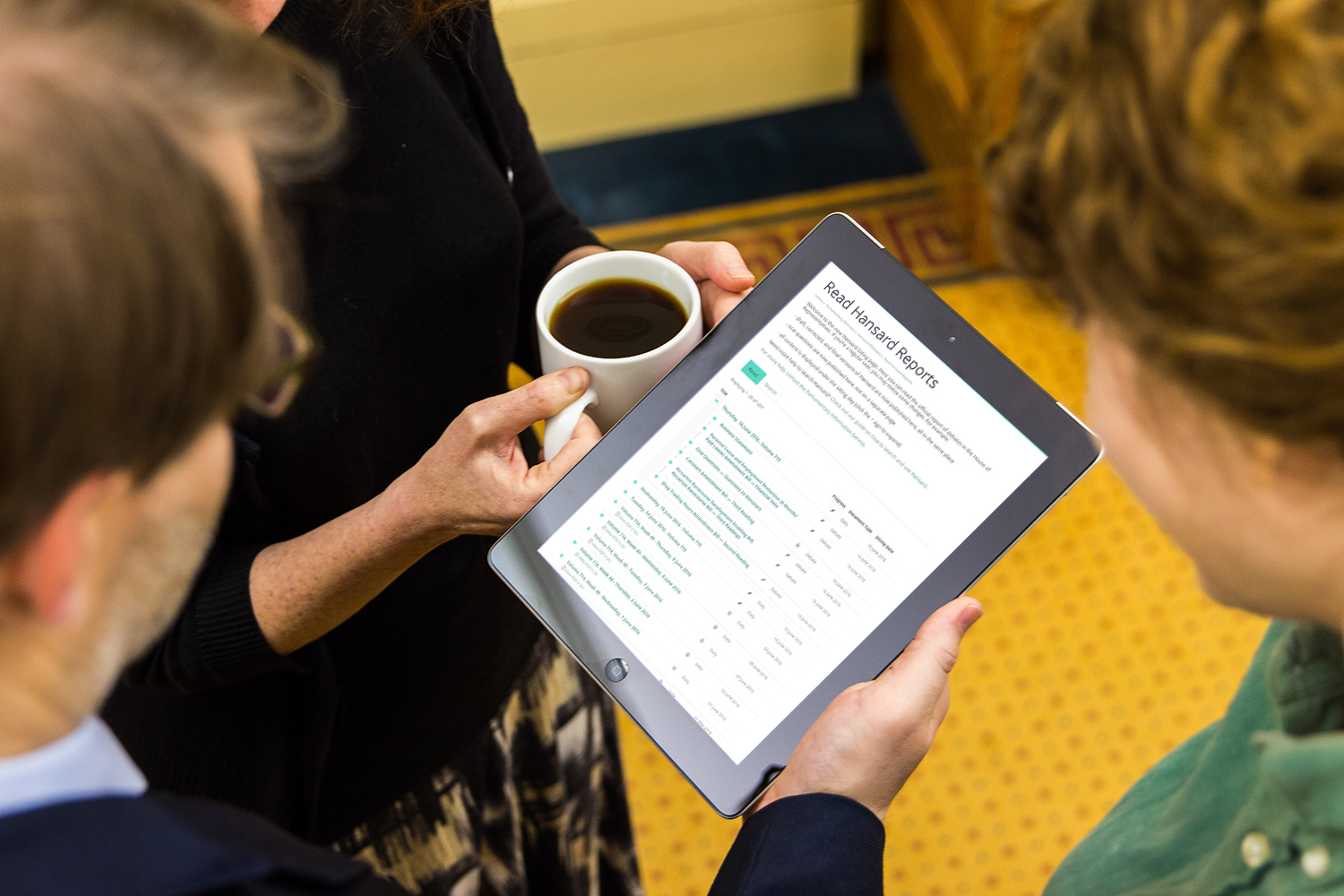
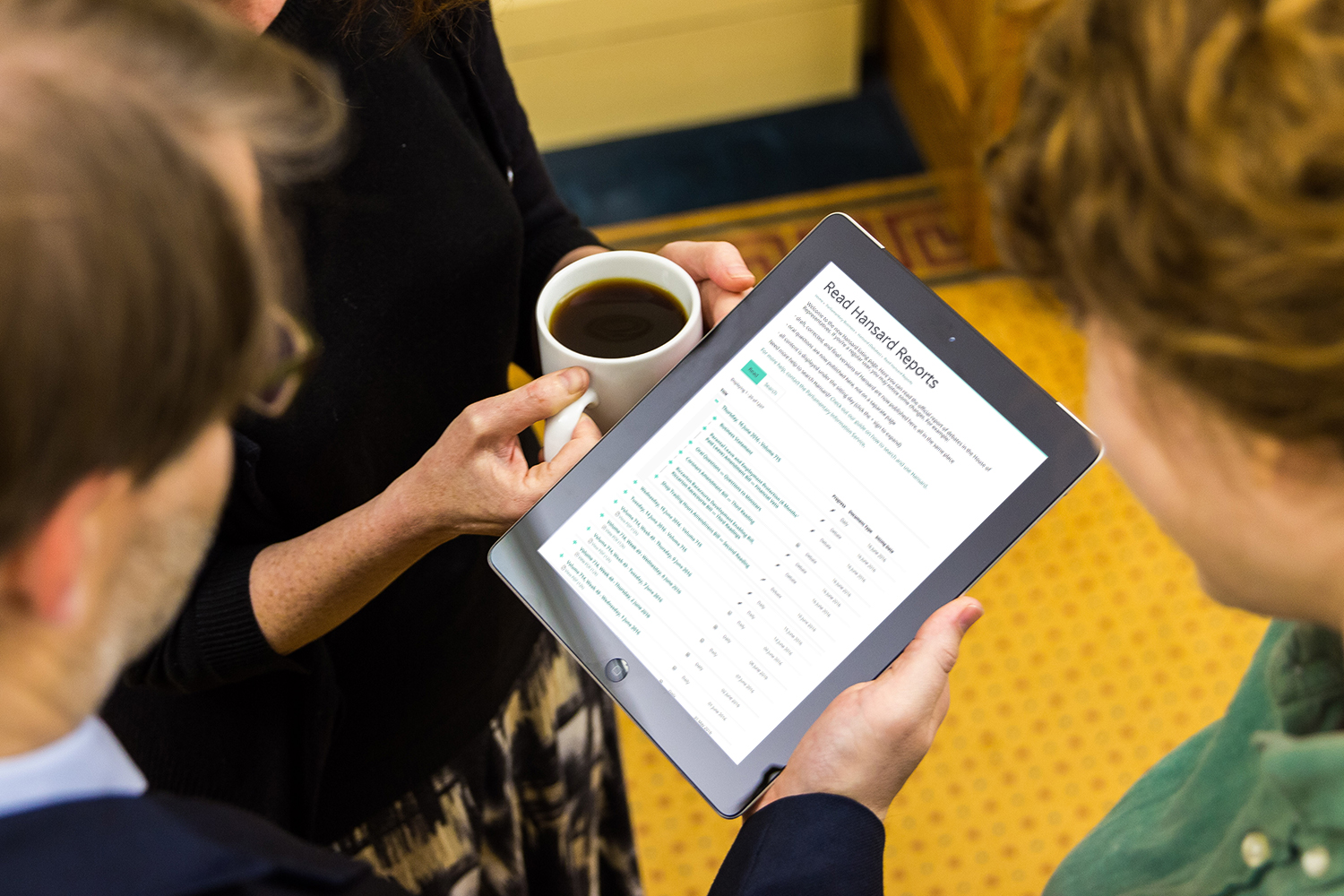
Parliament Hansard Report – Taxation (Budget Measures) Bill (No 2) — In Committee—Part 2 – 001483

Source: Govt’s austerity Budget to cause real harm in communities

Part 2 Amendments to other enactments

CHAIRPERSON (Maureen Pugh): Members, we now come to Part 2. This is the debate on clauses 17 to 30, to the “Amendments to other enactments”. Part 2 contains changes to the KiwiSaver regime as well as changes to the Tax Administration Act 1994. The question is that Part 2 stand part.

Rt Hon ADRIAN RURAWHE (Labour): Point of order. Thank you, Madam Chair. I refer to two matters. Before the closure motion and the vote on Part 1, the Chair seemed to indicate that despite the end of Part 1, that those elements of the KiwiSaver from Part 1 could be debated in Part 2. I just want to confirm that that’s the case, mainly because it is a bit odd given that we’ve voted on amendments to KiwiSaver clauses—but that’s what she indicated. There were very few calls on the KiwiSaver and I note that colleagues from the Green Party and Te Pāti Māori were seeking calls but were not given the opportunities to speak on that part of Part 1—

CHAIRPERSON (Maureen Pugh): I understand.

Rt Hon ADRIAN RURAWHE: So my question, just for clarity of the committee, is: have I heard that correctly?

CHAIRPERSON (Maureen Pugh): You have heard that correctly, sir. And I was watching the debate and I heard the previous Chair make reference to being able to go back, where relevant, into clause 1 as it relates to KiwiSaver.

Hon Dr DEBORAH RUSSELL (Labour): Speaking to the point of order. I just want to really, really clarify this because, with respect, the operative changes to the KiwiSaver regime actually occurred in Part 1. The Chair seemed to think that we could, in actual fact, discuss those operative changes in Part 2, but that’s going to be very hard because we can’t relate them to a clause in Part 2—they actually sit in Part 1. The amendments in Part 2 are very, very technical and just to do with a very small part of the changes. So may I suggest that provided we bring up new points, that we have a rather more thematic debate in Part 2 around KiwiSaver? We could confine it to KiwiSaver and always make sure we are bringing up a new idea rather than repeating ideas, rather than trying to relate specifically to clauses.

Tim van de Molen: Speaking to the point of order.

CHAIRPERSON (Maureen Pugh): I’ll just take some advice from the Clerk. Speaking to the point of order, Tim van de Molen.

TIM VAN DE MOLEN (National—Waikato): Thank you, Madam Chair. There is, obviously, under Part 2, clause 17, which relates to KiwiSaver. My understanding of the comments from the Chair during the previous part were that KiwiSaver can, of course, be debated in Part 2 because there is a clause for that. But it would not be appropriate to give the committee the ability to rehash everything in clause 1 aspects of KiwiSaver because, of course, that’s been dealt with and voted on and completed under that part. So it should indeed be constrained to this part.

CHAIRPERSON (Maureen Pugh): We’re all in agreement. I think everyone understands as it—and I did listen to the previous Chair and she has provided me with confirmation of her ruling. So I think you’re correct, Dr Russell, that we can refer back to clause 1 as it relates to the KiwiSaver. But I think we’ll just see how the substantive questions come through. To your point about the repetition, we will be very alert to that. Thank you.

Retail activity up in the March 2025 quarter – Stats NZ media and information release: Retail trade survey: March 2025 quarter

Source: Statistics New Zealand

Retail activity up in the March 2025 quarter 23 May 2025 – The total volume of retail sales in New Zealand increased by 0.8 percent in the March 2025 quarter compared with the December 2024 quarter, according to figures released by Stats NZ today. Figures are adjusted for price inflation and seasonal effects.

“Growth in retail activity was modest in the March quarter, with the majority of industries contributing positively,” economic indicators spokesperson Michelle Feyen said.

“Motor vehicle retailing, and pharmaceutical and other store-based retailing saw the largest increases this quarter.”

Ten of the 15 retail industries had higher retail sales volumes in the March 2025 quarter, compared with the December 2024 quarter, after adjusting for price and seasonal effects.

Files:

Police shut down drug operations across Kumeū

Source: New Zealand Police

Police have uprooted several illicit drug operations nestled amongst the community in Northwest Auckland.

In the past week, Police have recovered nearly 400 kilograms of cannabis, 40 grams of cocaine and made three arrests.

Waitematā North Area Commander, Inspector Mike Rickards says local Police have been targeting large cannabis grow house operations run by Vietnamese organised criminal groups around the Kumeū area.

Warrants were terminated yesterday, 21 May, and 16 May at two properties.

“On Wednesday, our Kumeū and Helensville staff terminated a search warrant at a Station Road property where a sophisticated operation was uncovered.

“At the property, we located 931 cannabis plants weighing 237 kilograms.”

Police also located a vast amount of equipment used to manufacture.

It followed a previous warrant last Friday at a nearby address, where two Vietnamese nationals were arrested.

Inspector Rickards says Police located 130 cannabis plants weighting up to 155 kilograms.

“Inside, we also seized a large amount of cash as well as high-end equipment used in the manufacturing of cannabis.”

Cocaine was also located at the property.

Two arrests were made, and a 27-year-old woman and a 32-year-old man have been remanded in custody on drugs offences.

A third warrant was also conducted on 16 May, which resulted in a Head Hunters associate being arrested.

“The Waitematā Gang Disruption Unit and members of the Offender Prevention Team attended,” Inspector Rickards

“A 36-year-old man was arrested after he initially tried to dispose of illicit drugs at the address.”

Police located 30 grams of cocaine as well as cannabis at the property.

The man was arrested and has been charged with possession for supply of cocaine and cannabis.

Inspector Rickards says Police are pleased with the outcome.

“Our team’s operations over the past week have in no doubt disrupted the illegal operation and prevented harm in our community.

“It will have had an impact on drug distribution across the Rodney area.

“We’re really clear that we won’t tolerate this in our community, and we’ll continue to target these groups who are cashing in on their offending.”

ENDS.

Jarred Williamson/NZ Police

Parliament Hansard Report – Thursday, 22 May 2025 (continued on Friday, 23 May 2025) – Volume 784 – 001482

Source: Govt’s austerity Budget to cause real harm in communities

Hon SIMON WATTS (Minister of Revenue): Thank you very much, Madam Chair. Look, a very good morning, everyone. Welcome back to the growth Budget, and what a great Budget it is. I don’t mind doing a basic lesson in what depreciation is for the member because, in effect, what we are doing is increasing the rate at which people can claim a tax deduction, increasing it in the first year and the balance will be claimed for the rest of the asset life. This is a timing difference; we are bringing forward that ability to claim that tax deduction. We’re not creating some new world or new paradigm of other aspect. We are simply moving that benefit forward so that New Zealand businesses can achieve a tax deduction—from yesterday—and get the benefit of that in terms of less tax this year.

That is a significant investment and opportunity for them as a business. But it in no way has any impact on what would be a normal rate of depreciation on any economic asset over the life of that asset. So the whole premise of the question is uninformed and without basis. Our policy is very much focused on delivering that economic growth. And heck, I mean, I guess some people in the House are concerned about too much economic growth. But on this side of the House, we think a little bit differently. We sort of think economic growth is a good thing. It sort of helps us with a range of factors including higher paid jobs, better standard of living, and more tax revenue flows.

CHAIRPERSON (Barbara Kuriger): That’s true, but that’s not what the member asked the Minister, thank you.

Hon SIMON WATTS: Well, the member asked about the risks in regards to the policy and I have clarified that it is a depreciation policy which is well articulated in accounting standards.

Parliament Hansard Report – Taxation (Budget Measures) Bill (No 2) — In Committee—Part 1 – 001481

Source: Govt’s austerity Budget to cause real harm in communities

Hon SIMON WATTS (Minister of Revenue): Thank you very much, Madam Chair. Look, a very good morning, everyone. Welcome back to the growth Budget, and what a great Budget it is. I don’t mind doing a basic lesson in what depreciation is for the member because, in effect, what we are doing is increasing the rate at which people can claim a tax deduction, increasing it in the first year and the balance will be claimed for the rest of the asset life. This is a timing difference; we are bringing forward that ability to claim that tax deduction. We’re not creating some new world or new paradigm of other aspect. We are simply moving that benefit forward so that New Zealand businesses can achieve a tax deduction—from yesterday—and get the benefit of that in terms of less tax this year.

That is a significant investment and opportunity for them as a business. But it in no way has any impact on what would be a normal rate of depreciation on any economic asset over the life of that asset. So the whole premise of the question is uninformed and without basis. Our policy is very much focused on delivering that economic growth. And heck, I mean, I guess some people in the House are concerned about too much economic growth. But on this side of the House, we think a little bit differently. We sort of think economic growth is a good thing. It sort of helps us with a range of factors including higher paid jobs, better standard of living, and more tax revenue flows.

CHAIRPERSON (Barbara Kuriger): That’s true, but that’s not what the member asked the Minister, thank you.

Hon SIMON WATTS: Well, the member asked about the risks in regards to the policy and I have clarified that it is a depreciation policy which is well articulated in accounting standards.

City centre opens up for more homes and jobs

Source: Secondary teachers question rationale for changes to relationship education guidelines

Taller buildings and increased development capacity are on the way for Auckland’s city centre, following Auckland Council’s decision to accept recommendations that will help deliver more homes, more businesses, and better access to the heart of Tāmaki Makaurau.  

The decision was made by Auckland Council’s Policy and Planning Committee, which accepted in full a set of recommendations from the Independent Hearings Panel (IHP), an expert body established to hear public submissions and evidence on Plan Change 78. The IHP recommendations were based on extensive public input, expert evidence, and hearings.

“As a city resident, I’m pleased plans to increase density to allow more growth in the central city under Plan Change 78 are now done and dusted. When I look at the swathes of people coming in and out of the city to work every day, this makes a lot of sense. It is also one of three growth areas highlighted in my manifesto”, says Mayor Wayne Brown.  

Unlocking long-term capacity

Chair of the committee, Councillor Richard Hills, says unlocking this amount of development capacity in the city centre makes room for well over four times the number of homes and businesses we have today. This enables around a 300 per cent increase in floor space. 

“This is a positive step forward giving more people the chance to live, work, and study close to major transport, shops, and services, future-proofing our city for the people who live here now and the ones still to come. 

“Our city centre is already one of Auckland’s fastest-growing residential areas and our largest employment hub. It supports around 159,000 workers and 15,500 businesses, contributing approximately 20 per cent of Auckland’s total GDP and around 8 per cent of New Zealand’s. 

“Our decision today, will help create a more vibrant, bustling and lively city centre — one that’s alive with people, jobs, culture, and opportunity — like you see in successful cities around the world.” 

“It also supports our investment in the City Rail Link and other city centre upgrades which is also helping to attract $6 billion of private-sector investment. This further strengthens the city centre’s role as a hub for jobs, housing, retail, hospitality, culture and community.” 

What the changes involve

Most of the changes the council publicly notified in Plan Change 78 were backed by the IHP with only a few minor differences, which advances the council’s overall growth strategy for the area. 

Key changes include increasing building heights across much of the city centre and removing limits on floor areas to allow for a wider variety of building sizes and types. These changes are central to the council’s plan for more quality homes, businesses and services in the heart of Auckland and supporting a liveable, dynamic and attractive city centre. 

18 midtown developments – recent, underway and planned – within 5 minutes’ walk of 3 Te Waihorotiu Station entrances. Station entrances shown in blue on map.

What’s next for Auckland’s growth plan? 

With the council’s decisions now made, they will be notified by 30 May 2025. Once notified they will be included in the Auckland Unitary Plan and are expected to become operative in June 2025. 

Outside of the city centre, Auckland Council is working on a new plan change that will deal with two of the biggest challenges we face in our region – strengthening rules to better protect people from natural hazards such as flooding and enabling more housing in the right places, especially near large centres and transport hubs. On its own the legislation that underpins Plan Change 78 does not let us tackle the challenges that floods pose or consider the government’s proposal to opt out of the MDRS. 

For this work to proceed, a change in legislation is required to allow the council to withdraw the remainder of Plan Change 78, except for the city centre decisions made today, which is being considered as part of the government’s RMA reforms. The council is currently working on an approach while we wait for central government to give the go ahead. 

Key Changes

  • Maximum building heights have significantly increased within the City Centre Zone. In many areas, including along the western edge, height limits will increase from 30 metres to 72.5 metres, roughly 20+ storeys. In the core of the city centre there will be unlimited height (subject controls to protect sunlight access to key parks and open space, significant views of the harbour and maunga, and historic heritage). 

  • The council’s changes in the publicly notified Plan Change 78 allowed for four times more development capacity in the city centre over what currently exists. The IHP has made further changes to allow for even more capacity. 

  • Modelling is underway to calculate the differences between the notified capacity and the further increases made by the council’s decision today. 

  • Floor Area Ratios — planning rules that limit how much total floor space can be built on a site — have been removed. This will allow far more flexible building designs for commercial and residential use and allows for more efficient land use, as long as buildings meet other adaptable urban design rules.

  • The western edge of Karangahape Road will increase heights from 15 metres to between 35 and 72.5 metres, depending on the building type, allowing more development in a walkable, well-connected area near rapid transit. This does not affect historic heritage protections for Karangahape Road currently in place.

  • The council accepted IHP recommendations to slightly reduce the Karangahape Road Precinct by removing a small block that includes 538 and 582 Karangahape Road. 
More Supercars for New Zealand

Source: Ministry of Business Innovation and Employment MBIE (2)


More Supercars for New Zealand | Ministry of Business, Innovation & Employment


Published: 23 May 2025

The Government is investing $5.9 million from the Major Events Fund to support Supercars events in both Taupō and Christchurch for the next 3 years.

The 2024 Taupō Supercars generated significant economic and tourism benefits for the region and New Zealand with more than 3,300 international visitors attending and spending more than $5.2 million while here. 

Having consecutive events in Taupō and Christchurch will allow international visitors to extend their stay in New Zealand, supporting tourism in our regions.

More information about Supercars:

2025 Repco Supercars Championship | Supercars(external link)

Read the Beehive press release:

Supercars for the South Island(external link) — Beehive.govt.nz

Last updated: 23 May 2025

Release: Govt guts emergency housing while need increases

Source: New Zealand Labour Party

The National Government has cut $1 billion from the emergency housing budget on the false pretence that demand is reducing, while also ending contracted emergency housing from December this year.

“The Government promised New Zealanders that those in genuine need would get access to emergency housing but the Budget shows they simply have no intention of providing it,” Labour housing spokesperson Kieran McAnulty said.

“The Government is trying to kid the country in to thinking that this is an area they can save money because the need isn’t there.

“It is a lie, borne out of the need to fill gaps in the Budget.

“Homelessness is increasing at unprecedented levels and frontline providers say things have never been so bad. Before this budget, homelessness had already grown by 40 percent in Wellington. Lord knows how high it is projected to grow, and how fast because of this budget.

“New Zealanders need to ask themselves a pretty simple question – do they trust the Government who need to make cuts to make their budget add up, or frontline providers who are seeing homelessness increase every day?

“Ending contracts without a clear alternative for where people will go is a disgrace. Housing is a human right.

“Make no mistake – families will be living on the street because of this decision today,” Kieran McAnulty said.


Stay in the loop by signing up to our mailing list and following us on FacebookInstagram, and X

Release: $1 billion of Māori funding gone

Source: New Zealand Labour Party

The Government should hang its head in shame after a budget that takes a knife to more Māori programmes.

“In Budget 2024 more than $300 million was cut from Māori specific initiatives – Te Arawhiti, The Māori Health Authority, and Māori TV. Budget 2025 cuts even deeper with around $750 million cut from Māori Housing, Māori economic funds, Māori Education and programmes like Māori trades training,” Māori Development spokesperson, Willie Jackson said.

“Over the two budgets, Tama Potaka has now slashed more than $1 billion of Māori specific funding and that is shameful.

“Louise Upston has also made the shameful choice to stop funding Māori trade training when Māori unemployment has risen to 10.5 percent, with no plan to support Māori into meaningful jobs.

“The biggest hit is in Māori housing. Whai Kainga Whai Oranga and the whole Māori housing programme has been scrapped. In total $624 million has been wiped from the books.

“Tama Potaka is ignoring the housing data showing Māori are in the most need and has chosen to wash his hands of Māori housing.

“This government is providing a mere $3 million per year worth of new funding for Māori Wardens and the Māori Women’s Welfare League – yet has increased its ministerial budget for international travel by $2 million per year.

“At the same time, David Seymour is introducing his Regulatory Standards Bill under urgency that extinguishes more Māori rights, cementing this government’s lack of care towards Māori.

“This government has proven once again that it has turned its back on the Māori-Crown relationship,” Willie Jackson said.


Stay in the loop by signing up to our mailing list and following us on FacebookInstagram, and X