Shellfish biotoxin warning for Western Firth of Thames

Source: police-emblem-97

New Zealand Food Safety is advising the public not to collect or consume shellfish gathered in the Western Firth of Thames region due to the presence of paralytic shellfish toxins.

“Routine tests on shellfish from Waimangu Point have shown levels of paralytic shellfish toxins over the safe limit,” says New Zealand Food Safety deputy director-general Vincent Arbuckle.

The warning extends from the mouth of the Waitakaruru River up to Pakatoa Island and across to the mid-point of the Firth.

“Please do not gather and eat shellfish from this area because anyone doing so could get sick.

“Affected shellfish include bivalve shellfish such as mussels, oysters, tuatua, pipi, toheroa, cockles and scallops, as well as pūpū (cat’s eyes) and Cook’s turban. Kina are still safe to eat.

“It’s also important to know that cooking the shellfish does not remove the toxin.”

Symptoms of paralytic shellfish poisoning usually appear within 10 minutes to 3 hours of eating and may include:

  • numbness and a tingling (prickly feeling) around the mouth, face, hands, and feet
  • difficulty swallowing or breathing
  • dizziness and headache
  • nausea and vomiting
  • diarrhoea
  • paralysis and respiratory failure and, in severe cases, death.

Pāua, crab and crayfish may still be eaten if the gut has been completely removed prior to cooking, as toxins accumulate in the gut. If the gut is not removed, its contents could contaminate the meat during the cooking process. Finfish are not affected by this public health warning, but we advise gutting the fish and discarding the liver before cooking.

New Zealand Food Safety has had no notifications of associated illness.

If anyone becomes ill after eating shellfish from an area where a public health warning has been issued, phone Healthline for advice on 0800 61 11 16, or seek medical attention immediately. You are also advised to contact your nearest public health unit and keep any leftover shellfish in case it can be tested.

“New Zealand Food Safety is monitoring shellfish in the region and will notify the public of any changes to the situation,” says Mr Arbuckle.

Commercially harvested shellfish – sold in shops and supermarkets or exported – is subject to strict water and flesh monitoring programmes by New Zealand Food Safety to ensure they are safe to eat.

For further information and general enquiries, call MPI on 0800 00 83 33 or email info@mpi.govt.nz

For media enquiries, contact the media team on 029 894 0328.

Find out more

Shellfish biotoxin alerts

Subscribe to shellfish biotoxins to receive email alerts

See signage in the affected area.

Podcast about shellfish contamination

Collecting shellfish and keeping them safe [PDF, 1.4 MB]

Causes and symptoms of toxic shellfish poisoning

About toxic algal blooms

Food safety for seafood gatherers booklet [PDF, 1.2 MB]

New HHS Report Urges Therapy For Trans Youth

Source: E-Commerce arrangement with China to boost Digital Exports

MEDIA RELEASE
2 May 2025

The U.S. Department of Health and Human Services (HHS) has released a report urging exploratory therapy for youth with gender dysphoria rather than the chemicalisation and surgical intervention approach.

This is yet another nail in the coffin of radical gender ideology and the medical experiments being foisted on our vulnerable young people.

The report says that many of these children and adolescents have co-occurring psychiatric or neurodevelopmental conditions, rendering them especially vulnerable, and is published against the backdrop of growing international concern about pediatric medical transition. They say:

Health authorities have also recognized the exceptional nature of this area of medicine. That exceptionalism is due to a convergence of factors. One is that the diagnosis of gender dysphoria is based entirely on subjective self-reports and behavioral observations, without any objective physical, imaging, or laboratory markers. The diagnosis centers on attitudes, feelings, and behaviors that are known to fluctuate during adolescence. Medical professionals have no way to know which patients may continue to experience gender dysphoria and which will come to terms with their bodies.

The report clearly outlines the risks of significant harm:

Nevertheless, the “gender-affirming” model of care includes irreversible endocrine and surgical interventions on minors with no physical pathology. These interventions carry risk of significant harms including infertility/sterility, sexual dysfunction, impaired bone density accrual, adverse cognitive impacts, cardiovascular disease and metabolic disorders, psychiatric disorders, surgical complications, and regret. Meanwhile, systematic reviews of the evidence have revealed deep uncertainty about the purported benefits of these interventions.

The report also says:

The “gender-affirming” model of care, as practiced in U.S. clinics, is characterized by a child-led process in which comprehensive mental health assessments are often minimized or omitted, and the patient’s “embodiment goals” serve as the primary guide for treatment decisions. In some of the nation’s 15 leading pediatric gender clinics, assessments are conducted in a single session lasting two hours.

The report rightly criticises the “gender-affirming” model of care recommended by the World Professional Association for Transgender Health (WPATH) – which is also the basis of NZ’s model via the activist group PATHA (Professional Association for Transgender Health Aotearoa), saying:

This model emphasizes the use of puberty blockers and cross-sex hormones, as well as surgeries, and casts suspicion on psychotherapeutic approaches for management of gender dysphoria… In the U.S., the most influential clinical guidelines for the treatment of pediatric gender dysphoria are published by WPATH and the Endocrine Society. A recent systematic review of international guideline quality did not recommend either guideline for clinical use after determining they “lack developmental rigour and transparency.”

Finally the report also calls out the harmful resistance to psychotherapy, including the mischaracterisation of such approaches as “conversion therapy” which actually affirms children in their biological body.

The rise in youth gender dysphoria and the corresponding demand for medical interventions have occurred against the backdrop of a broader mental health crisis affecting adolescents… There is a dearth of research on psychotherapeutic approaches to managing gender dysphoria in children and adolescents. This is due in part to the mischaracterization of such approaches as “conversion therapy.” A more robust evidence base supports psychotherapeutic approaches to managing common comorbid mental health conditions. Psychotherapy is a noninvasive alternative to endocrine and surgical interventions for the treatment of pediatric gender dysphoria. Systematic reviews of evidence have found no evidence of adverse effects of psychotherapy in this context.

Family First has written to the Director-General of Health Dr Diana Sarfati requiring the Ministry of Health to remove the reference to the PATHA Guidelines in the Position Statement on the Use of Puberty Blockers in Gender-Affirming Care issued by the Ministry on 21 November 2024.

The Guidelines for Gender Affirming Health care for Gender Diverse and Transgender Adults in Aotearoa New Zealand written by activists from PATHA makes statements on puberty blockers which are not supported by the findings from the Ministry’s own evidence brief, as summarised in the Position Statement on the Use of Puberty Blockers in Gender-Affirming Care, nor by other probative evidence.

Family First believes it is critical that the Ministry act immediately and make regulations under the Medicines Act to stop the prescribing of puberty blockers for delaying puberty in gender incongruent or gender dysphoric young people because there is insufficient quality evidence that puberty blockers are both safe and reversible and efficacious in the treatment of gender dysphoria.

New Abortion Pill Research Questions Health NZ Advice

Source: E-Commerce arrangement with China to boost Digital Exports

MEDIA RELEASE – 2 May 2025
Family First is calling on the Ministry of Health, Health New Zealand and Medsafe to respond to significant new research coming out of the United States that shows that almost one in nine women have serious adverse events after taking the abortion pill, mifepristone.

“The sheer scale of adverse events impacting women needs a response from New Zealand health officials, most importantly to let women know there are serious risks with the taking of these drugs” said Bob McCoskrie, Chief Executive of Family First.

The Ethics and Public Policy Center – a Washington DC-based institute – has released a report entitled “The Abortion Pill Harms Women: Insurance Data Reveals One in Ten Patients Experiences a Serious Adverse Event.”

The report analysed the all-payer insurance claims database which included 865,727 prescribed mifepristone-induced abortions from 2017 to 2023. Over this period of time, the researchers discovered that 10.93 percent of women experienced sepsis, infection, haemorrhaging, or other serious adverse events within 45 days following the use of the abortion drug, mifepristone.

“That mifepristone is regularly used and promoted here in New Zealand means the Ministry of Health, Health NZ, and Medsafe have a duty of care to inform women of the real risks of using the drug. Those importing the drug for use must also take responsibility for the real harms this research has uncovered. To continue saying the drug’s use is harmless is demonstrably false and putting women at risk of significant harm” said Mr McCoskrie.

While pro-abortion advocates will try and point to a Food and Drug Administration (FDA) clinical trials study which indicated a 0.5% likelihood of adverse events, this FDA study is now well out of date; based only on clinical trials; and involving only a fraction of the number of people this new research has studied.

Family First is calling for New Zealand health officials to respond by prioritising women’s health, ensuring the risks of taking mifepristone are clearly spelt out, and that access to the drug is only under a physician’s supervision – not the current situation where the drugs can be obtained over the counter at pharmacies or even via home delivery where there may be very little supervision or after-care.

Te Waihora/Lake Ellesmere opening underway

Source: PISA results continue to show more to be done for equity in education

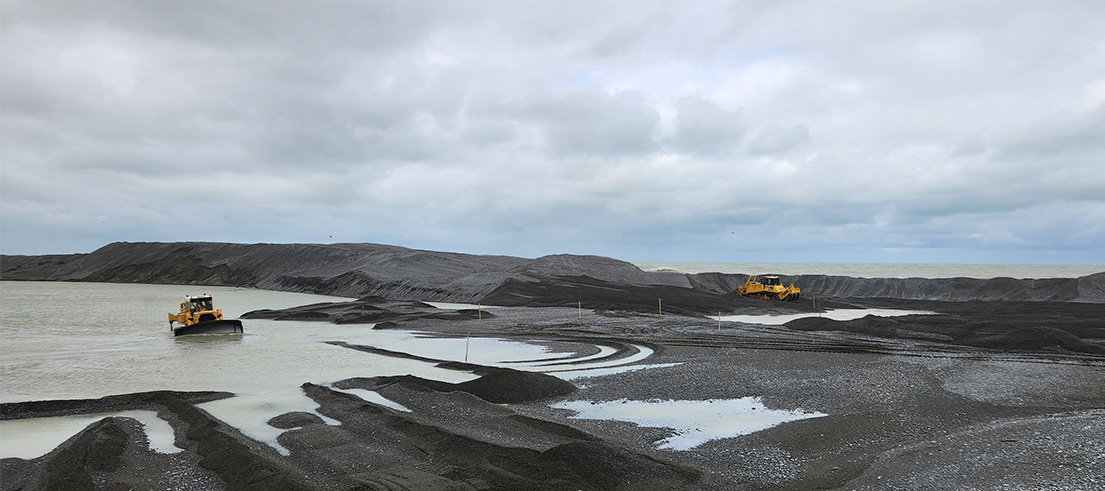
We have started the process of opening Te Waihora/Lake Ellesmere to the sea. Machinery is onsite and a sea connection will be made as soon as sea conditions allow in coming days.

Te Waihora/Lake Ellesmere is the largest lake in Canterbury and has no natural outlet to the sea. The lake is normally opened two to three times a year and closes naturally,

Openings are jointly managed by Ngāi Tahu and us and governed by the National Water Conservation Order and a suite of resource consents.

Opening Te Waihora/Lake Ellesmere

Consultation for a lake opening started on Monday 28 April and was completed by the afternoon of Tuesday 29 April, with a joint decision to open the lake when conditions were suitable. The same afternoon the lake height reached 1.13m, a level that permits opening, but it was not physically possible to carry out due to sea conditions.

The success of a lake opening depends heavily on favourable weather conditions. Wind strength, wind direction, sea swell, wave directions and the tides are all factors that can affect openings.

In difficult weather and adverse sea conditions, multiple attempts may be necessary, and a successful opening may take weeks or even months to achieve. An opening is considered “successful” when it persists for at least four days (the amount of time required on average to lower the lake level below the opening threshold).

Conditions now suitable for lake opening

With sea conditions slowly improving, we have started the process of opening the lake to the sea.

“While we’ve started the process of opening, current conditions including large sea swells mean the cut could still fill in. Opening the lake is a complex process of balancing values, safety and timing with the weather conditions,” said Leigh Griffiths, General Manager Hazards.

Attempting to open the lake at lower lake levels is also difficult as appropriate flow to the sea is required – any lower lake level opening before this event would have likely failed due to large sea swells.

“It’s not uncommon for the lake level to be high, and it isn’t always something we can prevent. Due to sea level rise and a changing climate, we will need to consider different solutions to increase flood resilience for the local communities.”

We are working collaboratively with Civil Defence, District Councils and other agencies and updating our flood warning webpage with the latest information.

For more information visit: Opening Te Waihora/ Lake Ellesmere

Teaching Council report more cause for concern

Source:

“In order to maintain the trust and confidence of teachers and other stakeholders, it is essential for the Council to act on good advice and exercise good judgement. We have ongoing concerns about the Council’s ability in this regard. The report released this week does not allay our concerns.”

Melanie Webber says the report notes several areas where the Council fell short of meeting its responsibilities. “The fact that this incident was able to happen in the first place is unacceptable; teachers and school communities entrust the Council with highly sensitive information that has the potential to be damaging if it was released publicly. The Council should have fail-safe systems, ‘guard-rails’ and processes in place to prevent incidents such as this from ever occurring. In not doing so they have failed their staff as well as the profession. 

“The report found that the process to identify and contact parties affected by the breach was rushed, and ultimately insufficient. Indeed, the independent review concludes that ‘contacting the wider group of named individuals would have been unlikely to cause harm and was likely to have supported the maintenance of trust and confidence in the Council by the profession’. 

“We’re also concerned about the report’s finding that the Council did not communicate the full extent and detail of the sensitive nature of the breach to the Education Minister’s office at the time of the incident.  When you place this report alongside the judgement of the High Court last year which found, among other things, that the Council had misled the Minister on aspects of its planned fee increase, a  concerning pattern emerges.

“A lack of confidence and trust in the Council has implications for the quality and standards of teaching. Teachers, students and everyone committed to world-class school education in Aotearoa New Zealand, deserve better.” 

Last modified on Wednesday, 17 May 2023 09:11

Introducing Rochelle Shadbolt

Source:

Having worked in Human Resources mostly in the health sector for 13 years, Rochelle Shadbolt is enjoying sitting on the other side of the table, working as a Field Officer in Taranaki and Manawatū-Whanganui regions.

“Sitting on this side of the table aligns much better with my leftist values and is very rewarding. I like helping people and supporting them through challenging circumstances. I have a lot of energy for making sure things are fair and right. It’s awesome being able to support and represent teachers, being part of making teaching a better profession to work in and helping improve public education in Aotearoa. I am a proud member of the Rainbow (LGBTQ+) community and whakapapa to Tūhoe and Ngāpuhi Iwi.

Inclusivity initiatives

Rochelle’s previous roles have enabled her to gain experience with employment processes such as disciplinary and performance matters, restructures, disputes and mediations. “I also got to do a lot of positive work supporting inclusivity initiatives for the Rainbow community, Te Tiriti partnership work and equity programmes for Kaimahi Māori, leadership development and programmes aimed at making the workplace better and improving job satisfaction for staff.

Rochelle says the biggest challenges of her Field Officer role, which she has been in since the start of Term 2 this year, involve learning the ins and outs of a whole new industry and profession. “Getting to know our collective agreements has been exciting and challenging.“ 

When she’s not working, Rochelle enjoys outdoor pursuits like rock climbing, hiking and camping. “I play drums, dance and do yoga. I like to read, game, listen to music, live where possible, and watch movies. Right now I am studying part-time at Massey towards another degree, in Psychology.

And about that surname? “Yes, Tim Shadbolt (renowned activist and Mayor of Invercargill) is my husband’s great uncle and he is a crack up at the regular family reunions we go to.”

Last modified on Wednesday, 17 May 2023 09:11

Email scam alert

Source:

There is a scam email going around that could seem to be from WorkSafe and says you owe money for overdue fees.

If you are expecting a bill from us but are unsure if the email is legitimate, you can contact us to check if it is real before you pay

Do not respond to scam emails or click any links in them. If you shared your bank details, contact your bank immediately.

The scam email might look like this:

Example of a phishing email scam

For more information about scams visit Scam Check | CERT NZ(external link)

Research – Latest insolvency report urges Kiwi business owners to heed early warning signs

Source: BWA Insolvency
Latest insolvency figures reveal a sharp rise in business failures, highlighting both challenges and opportunities for New Zealand business owners.

The BWA Insolvency Quarterly Market Report released today shows insolvency rates between January and March 2025 surged by 31% compared to the same period in the previous year. Liquidations rose by 40%, while receiverships and voluntary administrations saw a decline.
 
The report’s author, BWA Insolvency principal Bryan Williams, says that despite the data there is a path forward for those with strategic foresight.
 
“These numbers, while concerning, serve as a crucial alert for business owners to review their financial strategies,” Williams says.

 
Key Data
NZ Insolvencies Q1 2025 vs. Q1 2024 – Annual Comparison

  • Liquidations: Up from 504 to 705 (40%) 
  • Receiverships: Down from 40 to 39 (-3%) 
  • Voluntary Administrations: Down from 25 to 4 (-84%) 
  • Total Insolvencies: Up from 569 to 748 (31%) 

NZ Insolvencies Q1 2025 vs. Q4 2024 – Quarterly Comparison

  • Liquidations: Up from 666 to 705 (5.86%) 
  • Receiverships: Up from 37 to 39 (5.41%) 
  • Voluntary Administrations: Down from 6 to 4 (-33.33%) 
  • Total Insolvencies: Up from 709 to 748 (5.5%) 

Williams says the rise is partially attributed to global economic factors, including trade instabilities and market uncertainties, but is also a carryover of COVID-19 and the accumulated debt that resulted.
 
“Insolvency is always late to the party. It has a long incubation period and often doesn’t show itself until the conditions that caused it have moved on.”
 
Williams believes that amid rising insolvency rates, companies should remain vigilant in looking for ways to minimise the impact of the current turbulence. “Hedge against the potential for risk wherever and whenever you can,” he says. “By identifying warning signs early, businesses can adapt and thrive despite the economic pressures.”
 
Industries hit hardest in the last quarter were tourism, transport and delivery, construction and manufacturing. The construction industry has seen continued high rates of business failures, with this quarter’s figures showing no reprieve—insolvencies increased by 44%, up from 130 in Q1 2024 to 187 in Q1 2025.
 
“Companies with solid balance sheets can expect to ride out the challenges immediately ahead. Focusing on efficiency and innovation will be the wet weather coat for these companies.”
 
Acknowledging the impact of the current “arm wrestle” between the United States and China, Williams hopes both parties will soon recognise that fighting it out may cost more than it will gain.
 
“The best that can be hoped for is that leaders will pull back and let their respective societies grow as they will. The interplay of global tensions and local economic factors means New Zealand businesses must be agile and prepared. Our current insolvency figures are a reflection of these broader issues.”
 
Looking ahead, Williams believes there are reasons to be optimistic: “Though the short-term outlook remains challenging, New Zealand’s inherent resilience and adaptability are its greatest assets.
 
“Even one or two major projects within the country can dramatically shift business optimism, reinvigorating growth and opportunity,” he says. “Such developments can serve as a catalyst for broader economic revival.
 
“There is a road of turbulence ahead and this will damage plans that were made during more stable times. The effects will be universal and avoiding them will be like a rally driver trying to avoid potholes.
 
“Businesses that stay nimble, focus on core strengths, and prepare for future opportunities will be well-positioned when stability returns.”
 
The full Quarterly Market Report is available herehttps://bwainsolvency.co.nz/wp-content/uploads/2025/05/BWA_Insolvency-Market-Report_Q1-2025_FINAL.pdf
 
About BWA Insolvency 
BWA Insolvency is a leading insolvency firm that supports New Zealand businesses through liquidations, receiverships and voluntary administrations (VA), specialising in VA in particular.  Founder Bryan Williams has 30 years’ experience in the industry and has recently become just the second person in New Zealand and one of 200 people worldwide to be named a Fellow of global insolvency organisation Insol International. 
 
About the BWA Insolvency Quarterly Market Report
BWA Insolvency has been tracking data on liquidations, receiverships and voluntary administrations since 2012. The Registrar of Companies Office records the filings of companies that have gone into a formal state of insolvency. BWA Insolvency then does a deeper investigation to show industry trends and provide a detailed snapshot of what’s happening in the market for the Quarterly Market Report.

Climate – Warmer nights ahead with upper north wetter- NIWA’s Seasonal Climate Outlook for May to July 2025

Source: NIWA

Wetness is favoured for the northern North Island, with dryness a possibility for the western part of the North Island as well as western South Island, according to the latest Seasonal Climate Outlook for May to July 2025, issued by NIWA. 
Seasonal air temperatures are expected to be above average across all New Zealand regions, says NIWA meteorologist Principal Scientist – Forecasting & Media, Chris Brandolino.
“”Low pressure systems forming north of the country are expected to affect New Zealand and may lead to heightened risks for heavy rainfall events. In the absence of strong large-scale climate drivers, local and regional influences – inherently less predictable – are likely to dominate New Zealand’s climate over the forecast period.”
Chris Brandolino breaks down what New Zealanders can expect over the next three months. Will it be a warmer than average start to winter? Who is going to see above normal rain? And what does it mean for skiers, farmers, and hydro catchments? 

Greenpeace calls on Luxon to show leadership on dairy pollution as Canterbury floods highlight growing climate crisis

Source: Greenpeace

Greenpeace Aotearoa says that the damage caused by this week’s Canterbury floods is yet another reminder of the risk of continuing to ignore the climate crisis fuelled by the intensive dairy industry.
This week, devastating floods swept through the Canterbury region, causing many at-risk areas in the Selwyn District to evacuate, and leading to the declaration of a state of emergency in Christchurch City and Banks Peninsula.
Greenpeace Aotearoa spokesperson Will Appelbe, who is based in Canterbury, says: “The damage caused by this extreme weather event is real, and will impact communities in Canterbury into the future. But neither is this the last time we will see flooding like this in our region.
“As the climate crisis continues, we can expect to see storms like the one that battered the country this week increasing in intensity and happening more often – unless we take action to stop climate change from getting worse.
“Here in Aotearoa, the worst climate polluter is the intensive dairy industry, led by Fonterra. The oversized dairy herd is belching out huge amounts of superheating methane gas, which heats the climate much faster than carbon dioxide.”
“But as we’ve seen repeatedly in Canterbury, farmers are also among the first to directly experience the consequences of the climate crisis – with extreme weather events flooding their farms, or droughts leading to dry pastures.”
“The way farming is done in Canterbury has to change. We need to transition away from intensive dairying that harms the climate and pollutes waterways, towards more ecological, plant-based farming practices. And Fonterra and our Government need to support that transition.”
Since the 2023 election, Christopher Luxon’s Government has rolled back numerous policies that would have reduced New Zealand’s impact on the climate crisis, including several in the agricultural sector.
“Cantabrians are seeing the consequences of inaction on climate change today,” says Appelbe. “This Government’s decisions have prioritised profit for a select few over a liveable future for us all.”
“Luxon must show some leadership and reverse the anti-nature decisions he has made, particularly when it comes to our country’s worst climate polluter – the agricultural industry. Otherwise, the climate crisis will only get worse.”
Greenpeace says that some of the communities being evacuated in the wake of this flood are also dealing with nitrate-contaminated drinking water as a result of intensive dairying.
“If we change the way farming is done, we can prevent the worst of the climate crisis by reducing methane pollution from intensive dairy, and we can protect drinking water, lakes and rivers here in Canterbury, which are under threat from intensive dairy pollution.”