Source: PSA
Transport – It’s good to be a truckie on the Coast
Source: Ia Ara Aotearoa Transporting New Zealand
Myanmar: Life-saving education funding must be restored following USAID cuts
Source: Amnesty International
The United States and other governments must urgently find funding for education programmes in Myanmar that were a lifeline for students, teachers and families in the war-torn country, Amnesty International said today, as it warned of a “lost generation” if no action is taken.
Testimony from teachers and students gathered by Amnesty International showed the impact on Myanmar students of US President Donald Trump’s sweeping cuts to foreign aid, which included the termination of more than US$70 million in funding for education programmes in Myanmar, according to those involved in the efforts.
“The battering of Myanmar’s education sector since the 2021 military coup has robbed millions of young people of opportunities. These US cuts to education programmes now make the prospect of a lost generation increasingly likely,” said Joe Freeman, Amnesty International’s Myanmar Researcher.
“But it is not too late to fill this vacuum in Myanmar students’ education. Governments and universities in the US and beyond must find a way to enable them to continue their studies and prevent them being sent back to a conflict zone, where they are at risk of arbitrary detention, torture and other ill-treatment; aerial and ground attacks on their communities; and forced conscription into a military that routinely resorts to human rights abuses as a strategy of war.”
The US-funded education programmes, enacted after the coup, supported Myanmar students studying at Southeast Asian universities; online higher education initiatives; and basic education services for children in ethnic, remote and rural communities.
They were a rare bright spot in an ever-deteriorating human rights situation in the country, where to date more than 6,000 civilians have been killed and more than 20,000 detained. In 2025, nearly 20 million people are expected to need humanitarian assistance.
A 7.7-magnitude earthquake that struck central Myanmar on 28 March 2025, killing nearly 4,000 people and destroying hospitals, homes, monasteries and at least 1,000 schools, has only exacerbated these needs. It will also create additional hurdles for students seeking an education after more than four years of armed conflict in the country.
“The US cuts to foreign aid made a bad situation worse. The Trump administration must reverse course and not abandon Myanmar students working to fulfill their dreams under extremely challenging circumstances. But if the US continues to fail Myanmar’s young people, other governments, universities and donors must step up and help,” Joe Freeman said.
Myanmar education sector in turmoil
After the Myanmar military seized power on 1 February 2021, teachers and students walked out of schools in protest, entering a parallel education system under the deposed civilian government with new schools built from scratch, using existing buildings such as people’s homes and carried out online.
The military responded by arresting teachers and attacking schools with air strikes, as armed conflict intensified across the country, especially in places where schools in areas outside of military control were functioning. The overall situation led to a sharp decline in enrolment rates, limited access to functioning schools and a shortage in materials for teaching. Against this backdrop the US-funded education programmes carried out vital work to fill the void while also helping shield students, teachers and parents from human rights abuses.
Since late last year, Amnesty International has conducted remote and in-person interviews with more than 50 people involved in education across Myanmar from Chin, Rakhine, Kayah and Karenni States, as well as Magwe, Sagaing and Mandalay Regions and individuals living in exile. They include students, teachers, education officials, parents and survivors of air strikes on schools. All stressed the vital importance of education for the future of the country, despite the constant disruptions in providing it.
One teacher told Amnesty International: “Even when I’m teaching, I’m always on edge, especially when I hear aircraft overhead. There have been moments when I’ve heard the sound of artillery while teaching, which is deeply unsettling.”
Another said: “The main goal now is to prevent any disruption to the children’s learning, so schools have been reopened wherever possible. However, the quality of education isn’t as high as it was before the coup, mainly because of the constant need to relocate due to safety concerns. Teachers and students often have to flee both day and night, which disrupts the learning process.”
Among the most recent interviewees were recipients of a US-funded initiative called the Diversity and Inclusion Scholarship Program (DISP). Launched in 2024, this USD45 million USAID-funded programme aimed to support 1,000 students from Myanmar to study in universities online and across Southeast Asia in Cambodia, Indonesia, the Philippines and Thailand.
But it became an early and very public victim of President Trump’s attacks on anything related to diversity, equity and inclusion. One of his first announcements as president was to cancel the program, singling it out again in his joint remarks to Congress in March.
“While the US administration has falsely portrayed this programme as a prime example of wasteful spending, it is anything but. The students we spoke to describe the programme as providing a safe haven to them in times of war back home and of reinvigorating their dreams,” Joe Freeman said.
Miranda, 18, was in high school when the coup happened, and like other students participated in protests. Her family later fled to eastern Myanmar, where she witnessed gunfights and bombings, eventually crossing over into Thailand to seek shelter.
“When I got the [DISP] scholarship it was like a golden chance for me to start my new life again,” said Miranda, who was pursuing a degree in tourism management in the Philippines.
She had only finished her first semester when the programme was cancelled, making her one of hundreds across the region without support.
“If we have to go back to our country … we will be lost again.”
Oakley, a student from central Myanmar, faces similar challenges. But when he received the DISP scholarship, it gave him hope of a better future.
“I have experienced a lot of bomb explosions, a lot of war around my village. That is really devastating,” he told Amnesty International. “I believed that this was my life-changing opportunity. I feel shocked and so hopeless.”
Students like Miranda and Oakley fear going back to Myanmar, where they could be arrested for supporting anti-coup protests or be among Myanmar’s many victims of air strikes.
“Even though we want to go back to Myanmar, we cannot,” Oakley said. “The situation in Myanmar is not safe anymore.”
GAZA – PSNA joins with NZ Māori Council for call to action on Gaza
Source: Palestinian Solidarity Network Aotearoa (PSNA)
PSNA and the NZ Māori Council are jointly publishing advertisements today in the Post, Press and Waikato Times calling on the government to end its silence and take action on the Israeli genocide and ethnic cleansing in Gaza.
The Israeli blockage on all food, fuel and other essential supplies entering Gaza is now into its third month.
PSNA Co-Chair John Minto says, during the first year or so of the Israeli genocide in Gaza, Foreign Minister Winston Peters had been making statements warning Israel that it must not break the rules of international humanitarian law.
“Israel went ahead and flattened all of Gaza, displaced most of the people in the region and is now starving them. Israeli forces have killed tens of thousands – mostly civilians. It has attacked an international aid convoy in the western Mediterranean. It is bombing Syria again. These are all clearly war crimes.”
“Our government’s response has been to stop saying anything. It is giving licence to Israel to do anything it wants.”
“Since our advertisement was signed off, Israel has announced it will intensify its attacks on Gaza, openly declared its plans to cleanse the Palestinian population and that its forces will remain in Gaza indefinitely, leading to a return of Israeli settlements there.
“Added to the increasing rate of ethnic cleansing in the Occupied West Bank, Israel has clearly signalled it intends to finish the job of depopulating Palestine of Palestinians which it began in 1948,” Minto says.
In the UK parliament MPs from across the house have united in condemning Israel’s actions but not a peep from our government. (ref. https://youtube.com/watch?v=f9dws0yuaPY&feature=shared )
We expect the media to hold this government to account for its silent complicity with Israel’s heinous crimes.
John Minto
Co-National Chair
Palestine Solidarity Network Aotearoa.
Weather News – Heavy Rain Warnings and Watches across the country – MetService
Source: MetService
Covering period of Thursday 8th – Monday 12th May – This morning, pockets of heavy rain have been observed across the South Island, with precipitation expected to continue throughout today and into tomorrow.
Rain is expected to be heavy, especially in places already under a weather alert. A cold front advancing northward across the island will further intensify these conditions, sustaining both rainfall and strong winds.
The frontal rainband will continue its northward progression during the day and into Friday, bringing a risk of thunderstorms in some areas.
The following severe weather alerts have been issued for the next 24–36 hours. More details for each alert can be found on the MetService website:
- Orange Heavy Rain Warning for Fiordland north of Doubtful Sound, in effect until 9pm Thursday.
- Orange Heavy Rain Warning for the ranges of the Westland District, valid until 4am Friday.
- Orange Heavy Rain Warning for the headwaters of the Otago Lakes and Rivers, from 4pm Thursday to 1am Friday.
- Yellow Heavy Rain Watch for the headwaters of the Canterbury Lakes and Rivers, as well as over Nelson (Northwest of Motueka) and Richmond and Bryant Ranges, in place from 9pm Thursday to 7am Friday.
Meanwhile, the North Island has experienced mostly settled weather this week. Areas north of Taihape reported cloudy skies and isolated showers today, while conditions further south have remained largely sunny and mild. A shift is expected on Friday, with increasing cloud cover, blustery northeast winds and more widespread rainfall anticipated across much of the island, with spots of heavy rain and possible thunderstorms. MetService has issued several Heavy Rain Warnings and Watches for parts of the North Island on Friday.
- Orange Heavy Rain Warning for Northland, in effect from 3:00am to 5:00pm Friday.
- Severe Thunderstorm Watch for Northland between 9am-5pm Friday.
- Orange Heavy Rain Warning for the Bay of Plenty (east of Whakatāne) and Gisborne/Tairāwhiti (north of Ruatōria), valid from 3:00pm Friday to 3:00am Saturday.
- Orange Heavy Rain Warning for Tongariro National Park, expected from 8:00am to 8:00pm Friday.
- Orange Heavy Rain Warning for Mount Taranaki/Taranaki Maunga, valid from midnight Thursday to 3:00pm Friday.
- Yellow Rain Watch for Auckland, including Great Barrier Island, in effect from 6:00am to 6:00pm Friday.
- Yellow Rain Watch for the Coromandel Peninsula, Bay of Plenty west of Whakatāne (including the Kaimai Range), Waikato, Waitomo, Taumarunui, and Taupō, valid from 8:00am to 8:00pm Friday.
- Yellow Rain Watch for areas north of Taranaki, from midnight Thursday to 6:00pm Friday.
Despite the unsettled end to the week, conditions are forecast to improve over the weekend, with fine and mild weather expected across much of the country. Mother’s Day is shaping up to be settled and sunny for most, though some regions may experience morning cloud or fog.
MetService forecaster Kgolofelo Dube advises the public to remain informed by checking the latest forecasts and to follow official guidance, especially in areas currently under weather watches or warnings.
Please keep up to date with the most current information from MetService at http://bit.ly/metservicenz
Name release: Fatal crash, Temple View
Source: New Zealand Police
Police can now release the name of the woman who died in a crash in Temple View on 16 April.
She was 32-year-old Kerri David, from Melville, Hamilton.
Our thoughts are with those close to her at this time.
Enquiries to determine the circumstances of the crash are ongoing.
ENDS
Issued by Police Media Centre
Manurewa homicide: Name release
Source: New Zealand Police
Police can today release the name of the man who died at a property in Manurewa on Tuesday.
He was 30-year-old Selwyn Tetoko Hori Robson, of Auckland.
Detective Inspector Shaun Vickers says: “A 32-year-old woman has been remanded in custody to appear in the Auckland High Court on 28 May charged with Mr Robson’s murder.
“Police extend our thoughts to Mr Robson’s whānau and friends at this difficult time.”
ENDS.
Holly McKay/NZ Police
Speech to TRENZ 2025
Source: NZ Music Month takes to the streets
Tēnā koutou, tēnā koutou, tēnā koutou katoa.
Thank you for welcoming me here today, and for that lovely introduction from Rebecca Ingram from Tourism Industry Aotearoa.
I appreciate the great working relationships I have across the tourism sector and how we are united in wanting the best for our country.
It’s wonderful to be back in Rotorua – one of New Zealand’s best-known and best-loved tourism destinations.
Rotorua is actually the birthplace of New Zealand tourism.
In the 19th century, intrepid international tourists took a 75-day sea voyage from Britain to New Zealand, followed by a 200km steam train trip from Auckland to Tauranga, followed by a horse-drawn carriage ride to Lake Rotomahana via Rotorua (a distance over 100kms). All in pursuit of the famous pink and white geothermal terraces.
Once there, they were greeted by New Zealand’s first tour guides. Māori women from Rotorua’s local iwi Te Arawa demonstrated fantastic entrepreneurial spirit, not only by warmly welcoming these tourists but by developing businesses out of showing them what was then known as the “eighth wonder of the world”.
While the terraces were lost in a volcanic eruption in 1886, Rotorua’s geothermal attractions remain world-class. And its people remain some of the world’s best and most hospitable tourism operators.
I urge you to take the opportunity to experience all the amazing tourism experiences that Rotorua has to offer while you are here.
I was in Europe last week talking trade and security with our partners and also attending the Pope’s funeral, and I heard from people all around the world about how much they want to come visit New Zealand.
I can’t wait to work with all of you in the room today to welcome them here to experience all New Zealand has to offer.
Before we start, I would also like to thank the Premier Sponsor Air New Zealand and Tourism New Zealand, as well as all the prestigious event partners and organisers for bringing us all together and make TRENZ possible.
A special thanks to those who have travelled from overseas to understand and experience our tourism offerings. Your participation is essential to the success of TRENZ.
Context of TRENZ
Tourism is about people-to-people connection, and it is fantastic to welcome both the buyers and sellers to TRENZ.
As an industry, you should feel proud of your achievements in rebuilding our tourism sector and making such a huge contribution to our economy as a major employer and innovator.
You are our global ambassadors for New Zealand. And you foster thriving communities to live and work in.
We value you and the work you do enormously.
Importance of tourism to the New Zealand economy
Our Government is obsessed with economic growth because it is the only way Kiwis get higher incomes, more money in their pockets, more jobs, a future for their kids and grandkids, and better public services like health and education.
We can achieve this by playing to our strengths. New Zealanders are famous for our innovation and creativity – as demonstrated by those early Te Arawa tour guides. And we are also home to some of the most breathtaking scenery in the world. Snow-capped mountains and fjords, golden sandy beaches, subtropical forests, and volcanic plateaus.
Mix those ingredients together and you have a recipe for world class tourism experiences.
So, it’s no wonder that tourism is a lynchpin of our economy.
Domestic and international tourism expenditure is now worth over $44 billion annually. Tourism contributed 7.5 per cent of New Zealand’s GDP and it continues to be our second highest export.
More than four in five New Zealand residents (82 per cent of us) benefited from tourism activity in their local area last year.
But we have room for more.
Last year, we welcomed over 3 million visitors to our country.
Which is a 12 per cent increase on the previous year, but still fewer than pre-Covid.
There is plenty of capacity for more international tourists to visit our shores.
There is also more capability and opportunities to provide more premium attractions and experiences. This doesn’t necessarily mean more expensive – it means more high-value.
As good as our recent growth has been, globally we are middle of the pack in terms of the productivity per capita, which is measured by total value of tourism divided by the number of people working in it.
If we push ourselves and get into the top 10 per cent of the most productive tourism markets in the world, we can generate another $9 billion in value for the industry.
I hope that provides you with the motivation you need to keep innovating and keep investing in your businesses and tourism experiences.
Because tourism is a competitive market, and our job is to make sure we’re at the top of people’s lists and that we are converting desire to travel into reality.
Broader benefits of tourism
Welcoming more visitors here means more full tables in our restaurants, more bookings for our local accommodation providers, and more people visiting our regions and attractions.
But it’s not just businesses that are directly connected to the industry that benefit from tourism. The benefits of tourism filters into so many aspects of our society and economy.
I have already mentioned our beautiful natural environment which is the backdrop of so much tourism in New Zealand.
One of New Zealand’s great success stories has been our efforts to eradicate invasive pests which damage our environment. We are now world leaders in pest eradication and have developed technologies and methods which we export to the world. But our success is partly thanks to eco-tourism, which provides us with the commercial incentive and revenue needed to undertake conservation work.
Great examples of this virtuous cycle exist right here in Rotorua. Rotorua Canopy Tours provides visitors with an exhilarating experience of ziplining through ancient, native forest and it helps fund local conservation efforts.
Reasons like this are why we are rolling out the red carpet and making it easier than ever for the world to visit our beautiful country.
Removing barriers and growing tourism
We’re at a pivotal moment where bold, decisive actions are essential to reignite our tourism industry and propel it back to the heights of 2019—and beyond.
The Government is fully committed to this mission.
We have already invested more than $20 million in a Tourism Boost package and will shortly be launching the Tourism Growth Roadmap.
These investments are not just steps; they’re leaps forward in our broader Going for Growth strategy. We’re not just aiming to recover—we’re aiming to thrive.
I know our Minister for Tourism and Hospitality, Louise Upston, has been working hard to identify ways we can boost international tourism in the short-term.
Last month, we announced over $13 million for Tourism New Zealand to further bolster our international marketing.
Our Government is also committed to enhancing airline connectivity, recognising that it’s the lifeline to strengthening our global ties and boosting tourism and trade.
We are working hard to build better airline connectivity with important emerging markets such as India. When in India recently, I was proud to witness the signing of a MoU between Air New Zealand, Tourism New Zealand and Air India to encourage commencement of direct (non-stop) flight operations between the two countries.
We’ve also relaxed our visitor visa rules to accommodate the modern traveller. Digital nomads can now work remotely for their overseas employers while exploring New Zealand.
Our visa process is becoming more efficient too. In 2024, the average visitor visa was approved in only 7 working days, which was 2 days faster than in 2023. This means people can plan their New Zealand adventure with confidence, knowing that we’re here to make your journey as smooth as possible.
And here’s more good news: the majority of visitors do not need a visa to come here and instead can travel on a New Zealand electronic Travel Authority, which are processed within 72 hours. And, we have visa waiver arrangements with 60 countries, which is more than most of our comparator countries.
We pride ourselves on our user-friendly immigration and border services, ensuring the arrival is as welcoming as our stunning landscapes. We are open for visitors, and we continue to offer stability, consistency, and transparency in our offerings.
Conclusion
In closing, I want to thank you. Thank you for your passion and resilience and for the incredible experiences you offer visitors. Thank you again Kerry, Bex, and TIA.
2025 is our chance to strengthen the value of tourism and drive New Zealand to be a humming, vibrant country. Together we can continue our work on being a resilient and prosperous sector that provides high-quality experiences and services.
But we have to be bold.
Let’s continue to push our boundaries to ensure that New Zealand remains a world leader.
Keep up the great work, I look forward to talking with more of you throughout the event.
Name release: Fatal crash, Mangakino
Source: New Zealand Police
Police can now release the name of the woman who died following a crash on Waipapa Road, Mangakino on 21 April.
She was 64-year-old Woonkyung Lee, from the Republic of Korea.
Our thoughts are with her close ones at this difficult time.
ENDS
Issued by Police Media Centre
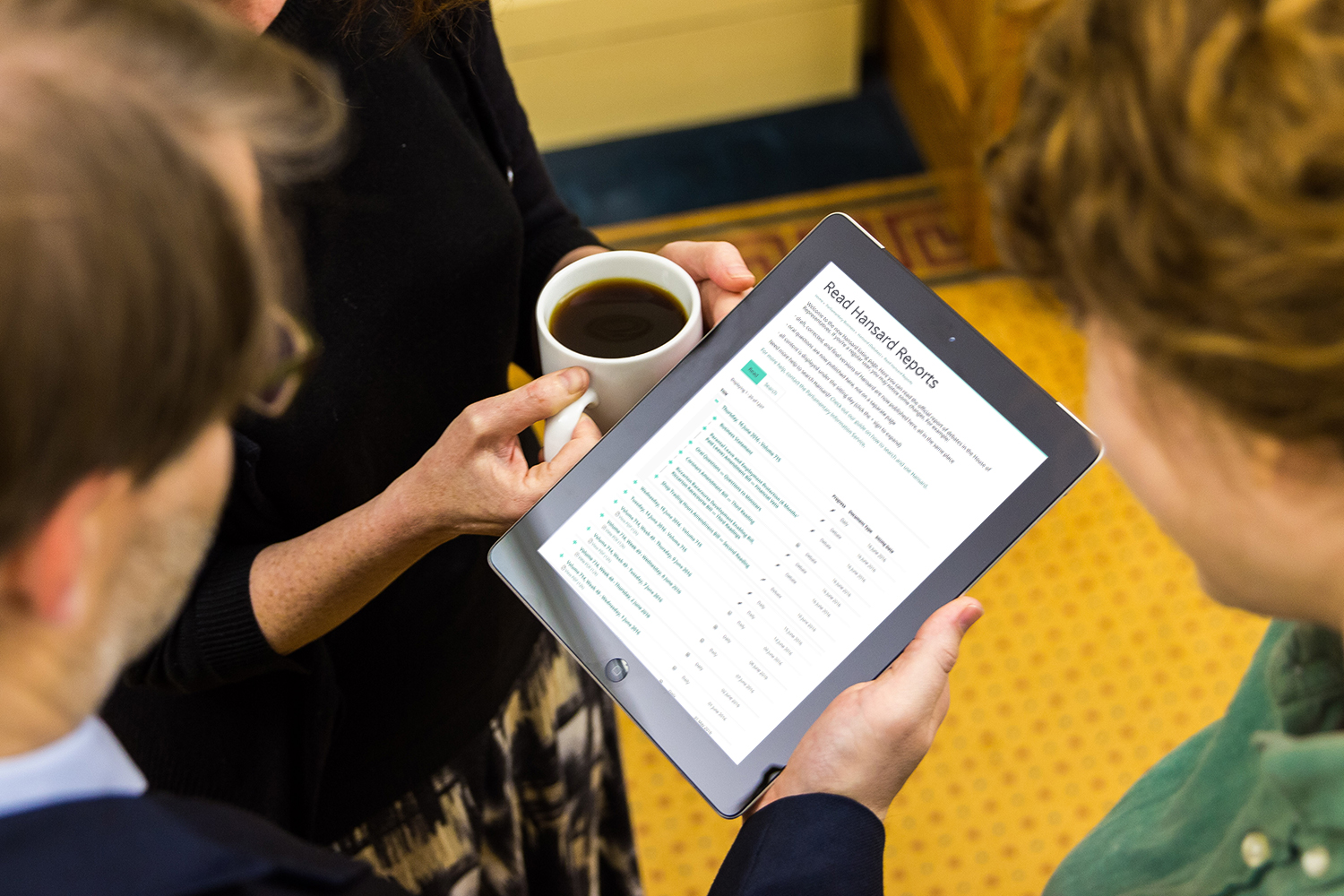
Parliament Hansard Report – Tuesday, 6 May 2025 (continued on Thursday, 8 May 2025) – Volume 783 – 001469
Source: Govt’s austerity Budget to cause real harm in communities
Hon PRIYANCA RADHAKRISHNAN (Labour): Thank you, Madam Chair. I do want to just begin by emphasising the need, as Rachel Brooking has pointed out, for a review period. Because what we see in Schedule 1AA refers to, potentially, a large number of projects, perhaps some that are active authorisations, some that are under way, and it is important, given the retrospectivity of this, that there is a review period.
The second point that I want to make, and a question for the Minister, is about the number of those projects. Now, we’ve seen, as I’ve mentioned previously in this debate, that there is no regulatory impact statement; there is no proactively released Cabinet paper. So we don’t have a huge amount of detail that, previously or in other situations, were this not being passed through all stages under urgency, we would have had access to. I have seen some media reporting that basically says that in the past 12 months, the Department of Conservation (DOC) has granted 85 similar permits to project applicants, and that, in total, 315 applications are under way where a section 53 permit or authority could be granted. So my question would be whether the Minister can confirm those figures, and also whether new Schedule 1AA in Part 2 would then apply to all of those—the 85 plus the 315 that are in train as well.
The third point that I want to make is in lieu of a select committee process, all we have—previously we would have submitters, many of whom have done a fair bit of work in this space in terms of reviewing the Wildlife Act and making suggestions on what should be changed within the Act. We would have ordinarily heard from them through a select committee process; we, of course, haven’t, given that we are sitting in urgency, and so all we have to go on are some of the press releases that have been put out on this particular piece of legislation. And I do want to check: there is one from the Environmental Law Initiative—of course, the lawyers who judicially reviewed the decision have said that, basically, it increases the burden on those who are, I guess, pushing those projects through—the 85 and the 315, if, in fact those numbers are correct. And I would be keen for the Minister’s view, given what’s in Schedule 1AA, on whether he agrees that it actually does increase the administrative burden both for DOC but also in terms of the legal tests that now those projects have to be put against.
There was also another comment, and I can’t find it in front of me at the moment, around the fact that, potentially, what DOC should have done—and, again, it’s just been two months since the High Court ruling; that is a point that has been made before: there hasn’t been a huge amount of time. Had this been either delayed a little bit or had there been a slightly lengthier process, or some select committee process, there potentially could have been time for DOC to then go through the cases, on a case by case basis. We are here because the High Court ruling ruled that in that particular case, the Mt Messenger Bypass case, the authority that was given under section 53 didn’t actually meet the purpose of the Wildlife Act as it was written back in 1953, and, therefore, just this carte blanche approach to now changing the law to change, ostensibly, the purpose of this Act so that the permits that were given retrospectively will now be legal does not necessarily mean that those who are shepherding those projects through have taken reasonable steps to protect biodiversity.
So there is an argument put forward that what DOC should be doing is to look at those 85 cases where there is legal uncertainty and try and work out whether reasonable steps have been taken to protect biodiversity in each of those cases. And I would really like to know what the Minister’s view on that is, but, also, what advice he received on that point: is that something that DOC could actually have done? Was there consideration around the time period that it would have taken for DOC to be able to go through all of those cases on a case by case basis?